
 Türkçe
 Deutsch
 العربية

Sexual health refers to a state of complete physical, psychological, and social well-being related to sexuality and is not limited only to the absence of disease or dysfunction. This concept includes a safe, respectful, and informed sexual life.
The issue of how sexual health is protected is directly related to regular health check-ups, the correct use of protection methods, and conscious partner selection. Education and awareness are of great importance in preventing sexually transmitted infections, and early diagnosis plays a vital role.
Symptoms of sexual health problems include pain, lack of desire, dysfunctions, and psychological effects. Such symptoms may arise due to different causes such as hormonal imbalances, infections, or stress and require specialist evaluation.
The relationship between sexual health and psychological factors has a determining effect on the individual’s self-confidence, relational satisfaction, and general quality of life. A healthy sexual life becomes sustainable through open communication, mutual consent, and emotional balance.
| What You Need to Know | Information |
| Definition | Sexual health refers to a state of complete physical, emotional, mental, and social well-being related to sexuality. It includes not only the absence of disease or dysfunction but also the presence of a safe and satisfying sexual life. |
| Scope | It includes reproductive health, sexual functions, sexual orientation and identity, sexual rights, safe sexual behaviors, and the prevention of sexually transmitted infections (STIs). |
| Sexually Transmitted Infections (STIs) | Infections such as HIV, HPV, chlamydia, gonorrhea, syphilis, hepatitis B, and C can be transmitted through sexual contact. Early diagnosis and treatment are important in terms of preventing complications. |
| Protection Methods | Condom use, regular health check-ups, monogamy, vaccines (such as the HPV and hepatitis B vaccine), and conscious sexual behaviors reduce the risk of infection. |
| Reproductive Health | It covers the healthy functioning of the female and male reproductive organs, menstrual regularity, sperm quality, fertility, and pregnancy processes. |
| Family Planning | Contraceptive methods (birth control pills, intrauterine device, condom, implants, etc.) enable individuals to have children consciously and in a planned way. |
| Sexual Dysfunctions | Erectile dysfunction and premature ejaculation may be seen in men; vaginismus, dyspareunia, and orgasm disorders may be seen in women. Psychological and physiological causes should be evaluated together. |
| Psychological Dimension | Stress, anxiety, depression, and relationship problems may affect sexual health. Psychological support and therapy may be necessary in some cases. |
| Hormonal Effects | Hormones such as testosterone, estrogen, and progesterone play a determining role in sexual desire and function. Hormonal imbalances may lead to sexual problems. |
| Puberty and Sexual Development | During puberty, physical and psychosocial development occurs along with hormonal changes. Correct information is important during this process. |
| Menopause and Andropause | During menopause, vaginal dryness and changes in libido may occur due to decreased estrogen. In andropause, a decrease in testosterone may cause reduced sexual desire. |
| Regular Check-ups | In women, smear tests and HPV screening; in men, urological examination and hormone tests when necessary are recommended. |
| Sexual Rights | Individuals’ rights to consent, privacy, safety, and informed decision-making are the fundamental elements of sexual health. |
| Education and Awareness | Access to scientific and accurate information is important in terms of preventing false beliefs and developing healthy behaviors. |

Prof. Dr. Berkan Reşorlu
Urology Specialist
Urology Specialist
Prof. Dr. Berkan Reşorlu, born in Ankara in 1979, completed his medical education at Ankara University between 1997-2003 and his urology specialization at Ankara University Faculty of Medicine between 2003-2008. Academically, he received the title of associate professor in 2013 and professor in 2022.
He has carried out extensive series studies in the field of endoscopic stone surgery, introduced surgeries applied to children under 1 year of age into the literature, and gained international recognition with his stone scoring system and experimental surgical models.





What Is Erectile Dysfunction and Why Does It Occur?
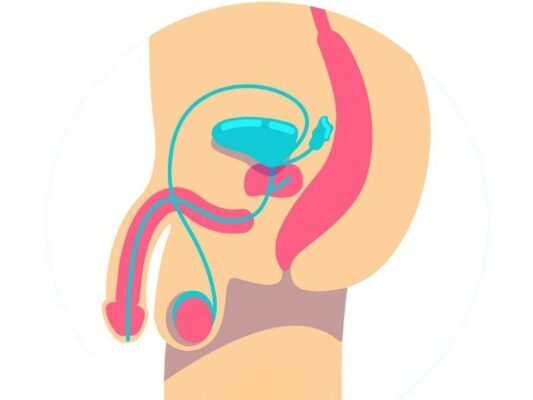
Erectile dysfunction, as it is called in the medical literature, is the inability to achieve the penile rigidity required for a satisfactory sexual relationship or to maintain the achieved rigidity throughout intercourse. This condition, which is quite common in society, generally arises as a result of a complex interaction between impaired vascular structure, disruptions in nerve transmission, hormonal imbalances, or intense psychological stress factors. The anatomical structure of the penis consists of spongy tissues that swell by filling with blood. With stimulation signals coming from the brain, the vessels in this area expand, blood rushes into the spongy tissues, and rigidity is achieved by preventing it from flowing out. Any problem at any stage of this flawless mechanism directly affects erectile quality.
In current medical approaches, this condition is not seen merely as an isolated problem belonging to sexual life. In fact, the penis acts as a very important and early warning barometer about the health of the cardiovascular system. The arteries feeding the penis have a very small diameter. Therefore, factors such as high cholesterol, diabetes, uncontrolled hypertension, or long-term smoking that damage the endothelial layer lining the inner surface of the vessels block the penile vessels much earlier than the major heart vessels. In other words, a decrease in erection quality may be the first harbinger, years in advance, of future cardiovascular problems.
Which Tests Are Used in the Diagnosis of Erectile Dysfunction?
In order to make a correct and permanent treatment plan, the underlying physiological or psychological cause of the problem must first be clearly clarified. By listening to a comprehensive patient history, lifestyle, medications used, and eating habits are examined in detail. Then clinical examinations are started.
The main diagnostic tools clinically used to clarify this process are as follows:
- Blood tests
- Total testosterone measurement
- Prolactin level
- Physical examination
- Digital rectal examination
- Penile Color Doppler Ultrasonography
- Neurological tests
- Psychological evaluation questionnaires
Especially Doppler ultrasonography has critical importance for examining the vascular structure. Thanks to this test performed using special vasoactive agents, the speed of blood flow entering the penis and its capacity to remain trapped inside can be measured millimetrically. Thus, it can be definitively determined whether the problem stems from arterial insufficiency or venous leakage.
How Does Shock Wave Therapy (Li-ESWT) Work in Erectile Dysfunction?
Low-intensity shock wave therapy is an innovative regenerative treatment method that aims to permanently repair the vascular damage underlying erectile dysfunction and rejuvenate the tissue. While conventional drug treatments offer a temporary solution by expanding blood vessels only for a few hours, shock wave therapy solves the problem at the cellular level. The high-energy sound wave technology used in past years to break kidney stones has now been modified with much lower energies and in a way that does not cause any harm to tissue, and has been integrated into the field of sexual health.
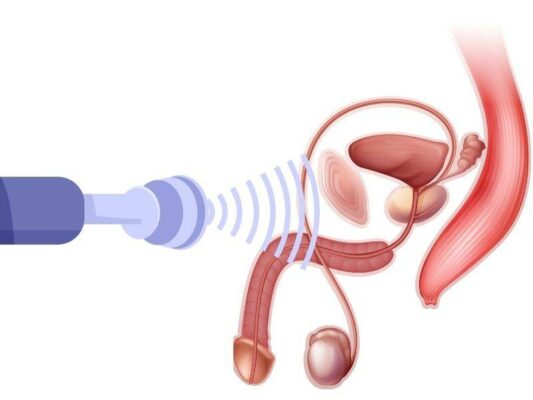
The main purpose of these sound waves is to activate cellular stimulation mechanisms in penile tissue. When the waves reach the tissue, the body perceives this as a microscopic stimulus and sends natural healing factors to that area. This biological response initiates the formation of new capillaries and permanently increases the blood supply capacity in the penis. It not only renews the vascular structure, but also activates dormant stem cells in that region and helps renew the smooth muscle cells that provide erection.
What Are the Application Standards of Shock Wave Therapy (Li-ESWT)?
This treatment protocol is specially planned according to the patient’s clinical condition and the extent of vascular damage. During the procedure, pulses are delivered to certain points in the anatomical structure of the penis with the help of a special applicator. After the procedure, the patient can immediately return to normal daily life without any restriction.
The general application features of this innovative cellular repair treatment are as follows:
- Low energy levels
- No need for anesthesia
- Painless procedure process
- No surgical incision
- Average twenty-minute sessions
- Six-session plans
- Twelve-session courses
- Outpatient treatment option
The biological tissue remodeling process of the treatment takes time. Therefore, permanent effects usually begin to be observed in the weeks following the completion of sessions, and tissue healing reaches its maximum level within months. It is an extremely comfortable option for individuals who do not want to use medication regularly or who are bothered by its side effects.
In Which Cases Is Penile Prosthesis (Happiness Stick) Preferred?
When more conservative and regenerative methods such as daily lifestyle changes, oral medical treatments, vacuum devices, or shock wave therapy do not provide the desired level of benefit, surgical solutions come into play. Especially in patients who do not respond to these conservative treatments, the method accepted as the “gold standard” for the full restoration of sexual function is penile prosthesis surgery. These devices, also popularly known as “happiness sticks,” are advanced medical materials placed inside the spongy tissues that provide erection and give the person the ability to have an erection whenever they want and for as long as they want.
Especially in patients with advanced uncontrolled diabetes for many years, in individuals whose vascular structure has become completely calcified, or in cases where the nerves have been damaged after major pelvic surgeries such as prostate cancer, it may not be possible to achieve a natural erection. The spongy tissue has now lost its elasticity and become fibrotic. In such terminal-stage conditions, penile prostheses provide an extremely natural, reliable, and permanent sexual life for both the individual and their partner by relieving the person’s psychological burden.
What Are the Types of Happiness Sticks and How Is the Choice Made?
With developments in the field of biomedical engineering, happiness sticks have reached an extraordinary stage in terms of mechanical durability, infection resistance, and aesthetic appearance. The devices used today are carefully selected according to the patient’s anatomical structure, daily hand dexterity, medical history, and individual expectations. Bendable models always have a certain degree of firmness and are directed manually, while inflatable models work with a fluid transfer mechanism and create a completely natural feeling of erection and flaccidity.
The main prosthesis types and components used in surgical restoration are as follows:
- Bendable prostheses
- Semi-rigid cylinders
- Inflatable hydraulic prostheses
- Two-piece models
- Three-piece models
- Scrotal pump mechanism
- Intra-abdominal fluid reservoir
- Antibiotic-impregnated coatings
The surgical process is carried out under extremely strict sterilization rules in order to reduce the risk of infection to zero. The special coating technologies on the prostheses eliminate the possibility of the body rejecting the device. After the healing process is completed, it is definitely not understood from the outside that the person has undergone such an operation.
Contact us now to get detailed information about treatments and to make an appointment!
What Is Varicocele and How Does It Cause Male Infertility?
Varicocele is the abnormal enlargement, elongation, and tortuosity of the venous network (pampiniform plexus) surrounding the testicles and carrying deoxygenated blood toward the heart. It can also be defined as the scrotal version of the varicose vein problem commonly seen in the legs. Although it is common in the general male population, it is encountered at much higher rates in infertile men who have difficulty having children and is the most important cause of infertility that can be corrected with microsurgery.
For healthy sperm production, the testicles need to be in an environment approximately two degrees cooler than the internal body temperature. However, when varicocele develops, the small valves in the enlarged veins lose their function. As a result, with the effect of gravity, deoxygenated and warm blood refluxes toward the scrotum. The increased blood pooling raises the environmental temperature, disrupts tissue oxygenation, and causes certain waste products coming from the adrenal glands to accumulate in the testicle. Increased oxidative stress and heat over time impair the structure of sperm-producing cells, causing a decrease in sperm count, reduced motility, and morphological abnormalities.
How Is Varicocele Diagnosed and What Are Its Stages?
This condition, which often progresses insidiously without causing any pain or ache, may sometimes reveal itself with a dull pulling sensation or fullness felt in the testicles when standing for a long time. A definite diagnosis is made with a detailed physical examination performed in a warm examination room, while the person is standing, and by having the patient perform a straining maneuver (Valsalva) that increases intra-abdominal pressure. In suspicious cases that cannot be detected by eye or hand, color ultrasonography imaging is used to measure vessel diameters and the speed of blood reflux.
The classification stages used to determine the clinical severity of the disease are as follows:
Subclinical varicocele
- Grade one
- Grade two
- Grade three
As the grade increases, the enlargement in the veins becomes visible even from the outside. Especially cases noticed during adolescence and causing a decrease in testicular size (atrophy) should be closely followed and treated rapidly when necessary in order to preserve future reproductive capacity.
Why Is the Microsurgical Method Important in Varicocele Treatment?
Not every varicocele case necessarily requires surgical intervention. However, if there is proven deterioration in sperm parameters, if shrinkage in testicular size has begun, or if there is chronic pain impairing the person’s daily quality of life, surgical treatment is planned. Today, the method accepted as the gold standard in the treatment of this problem is microsurgical varicocelectomy performed under high-magnification microscopes.
With a very small incision made in the groin region, the vascular package is reached. The use of a microscope allows the surgeon to see the area magnified up to fifteen times. This extraordinary sensitivity guarantees the preservation of the arteries that are vital in feeding the testicle and the very fine lymphatic channels that provide fluid balance within the testicle. Only the enlarged and functionless diseased veins are meticulously tied off and eliminated. While the risks of complications such as arterial injury and fluid accumulation (hydrocele) are almost completely eliminated thanks to the microscope, the possibility of recurrence in the following years is also reduced to the lowest level. Patients can return to their daily activities in a very short time after the operation.
How Do Peyronie’s Disease and Penile Curvature Develop?
Penile curvatures are examined under two different headings as structurally congenital or acquired conditions that develop later in life. Congenital curvatures are usually noticed during adolescence as the penis grows together with hormonal changes; in this case there is no pain or calcified plaque, and the problem stems entirely from anatomical asymmetry. However, the greatest cause of acquired curvature developing during adulthood is Peyronie’s Disease.
Peyronie’s disease is characterized by the accumulation of hard, fibrotic tissues on the very strong and elastic sheath (tunica albuginea) surrounding the spongy tissues inside the penis that fill with blood. It is thought to arise when microtraumas occurring during sexual intercourse but not noticed start an abnormal wound-healing process. These hard plaques eliminate the stretching capacity of the penis. As a result, during erection the penis bends, curves, or develops hourglass-like deformities toward the side where the plaque is located. While the early (acute) phase of the disease passes with severe pain, in the late (chronic) phase when plaque formation is completed, the pain disappears but the curvature becomes permanent, and erectile loss frequently accompanies this condition.
Which Patch (Graft) Materials Are Used in the Treatment of Penile Curvature?
Surgical intervention is definitely avoided in the first months when the disease is active and the pain continues. In this period, the aim is to stop plaque development and control the pain. However, when the disease passes to the stable phase and the curvature exceeds thirty degrees, making sexual intercourse physically difficult, anatomical repair surgeries are planned. In complex cases where the curvature is very severe or there is a significant loss of penile length, simply straightening by shortening the longer side of the penis is not sufficient. In such cases, the diseased plaque area is cut and opened, and the resulting gap is covered with special tissue patches (grafts) so that the penis both straightens and does not shorten.
The main biological and synthetic grafts used in the surgical repair of advanced curvature are as follows:
- Oral mucosa
- Equine collagen patches
- Saphenous vein grafts
- Human pericardial tissue
- Synthetic graft materials
The most important factors determining the success of the operation are that the graft used adapts quickly to the body, preserves its flexibility, and allows new vessel formation.
What Is Premature Ejaculation and What Causes It?
Premature ejaculation is the condition in which a man cannot establish sufficient control over the ejaculation reflex during sexual intercourse and the act usually ends within the first few minutes after vaginal penetration before both partners are satisfied. This condition, which leads to serious stress, loss of self-confidence, and communication problems between partners in sexual life, is one of the most common sexual dysfunctions in society.
This condition may be a primary structural situation that has existed throughout life since the person’s first sexual experiences, or it may be a secondary problem that emerges later in a certain period of life. Secondary cases usually have different medical reasons underneath. For example, chronic inflammation of the prostate gland (prostatitis), overactivity of the thyroid gland, or hidden erectile dysfunction causing the body to rush due to fear of losing the erection may be the main triggers of premature ejaculation. The control of the ejaculation reflex is directly related to neurotransmitters in the brain, especially serotonin levels.
Contact us now to get detailed information about treatments and to make an appointment!
Which Methods Are Used in the Treatment of Premature Ejaculation?
For successful treatment planning, it is first investigated whether there is another underlying infection or hormonal disorder. If such a secondary cause is detected, it is treated first. In patients directly diagnosed with premature ejaculation, various approaches are applied simultaneously or sequentially in order to prolong the reflex duration and regulate the serotonin mechanism in the brain.
The main treatment tools applied in clinical practice to prolong ejaculation time are as follows:
- Serotonin reuptake inhibitors
- Dapoxetine active ingredient
- Local anesthetic creams
- Delay sprays
- Stop-start technique
- Squeeze exercises
- Behavioral therapies
While specific medical treatments used before intercourse give control of the reflex back to the person, topically applied local treatments blunt the excessive sensitivity of the skin. Behavioral exercises, on the other hand, allow the individual to discover their own body’s arousal thresholds and mentally manage this threshold.
Which Methods Are Applied in Penis Enlargement and Aesthetic Procedures?
Intense concerns about physical appearance and self-confidence problems are increasingly becoming common reasons for applications to andrology clinics today. However, at this point, medical realities and aesthetic expectations must be brought together on a correct basis. In the medical literature, only conditions below a certain length (below seven centimeters in erection) are called “micropenis” and constitute a definite surgical necessity. Requests for enlargement or thickening outside this are evaluated within the scope of aesthetic procedures aimed entirely at improving the individual’s body perception.
Operations generally serve two main purposes: length increase and girth enlargement. In order to provide length increase, the suspensory ligaments connecting the penis internally to the pelvic bone are surgically loosened or released. Thus, a portion of the inner shaft of the penis is brought outward; however, this increase mostly affects the flaccid length rather than the erect state. In thickening procedures, the person’s own fat tissue taken from the abdomen or leg region with special cannulas is passed through certain filtration processes and then injected homogeneously into the subcutaneous tissue of the penis. In order for the tissue to shape correctly after the procedure and for the ligaments not to adhere back to their former place, the strict performance of special physical exercises lasting weeks is essential for the final success of the operation.
How Are Sexually Transmitted Diseases (STDs) and HPV Transmitted?
One of the most critical aspects of the sexual health spectrum is microorganisms transmitted from person to person through sexual contact. The most dangerous aspect of these infections is that in a very large proportion of infected individuals, they can progress very insidiously without creating any obvious symptoms such as discharge, itching, lesions, or pain. This silent carrier state causes pathogens to spread rapidly and unnoticed between partners. Untreated chronic infections can pave the way for serious conditions leading to permanent blockages in the reproductive tract and even infertility over time.
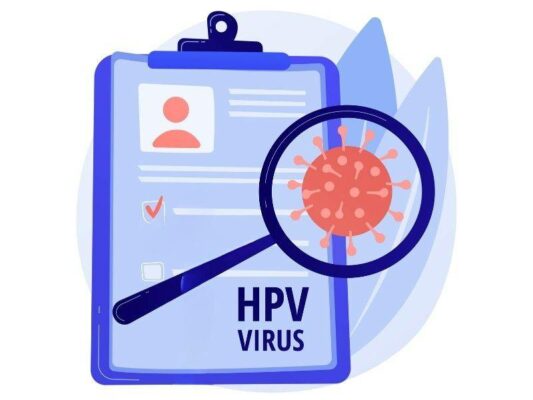
Today, one of the most common viral agents is the Human Papilloma Virus (HPV). This virus, which is basically transmitted through micro-frictions from skin to skin, has hundreds of different subtypes. While some types cause only warts that create aesthetic problems, types classified as high-risk may disrupt the cellular structure and lead to the development of various types of cancer in the long term.
Which Infections Can Be Screened with the Multiplex PCR Test?
Classical culture or swab tests, which were frequently used in past years, could be quite insufficient in detecting some persistent bacteria and viruses. Moreover, the fact that the patient was using antibiotics at that time could mislead the test results. In modern medical practice, molecular DNA screenings, namely Multiplex PCR technologies, which are the most reliable, fastest, and most sensitive method in the diagnosis of infections, are used.
The main pathogens that can be detected from a single sample through this advanced molecular panel are as follows:
- Chlamydia
- Gonorrhea
- Mycoplasma
- Ureaplasma
- Herpes viruses
- Syphilis
- Trichomonas
- Gardnerella
Since PCR technology directly searches for the microorganism’s genetic code (DNA), the results are extraordinarily precise and play a life-saving role in clarifying silent cases that show no symptoms at all.
Blog Posts

Genital Warts: Which Doctor or Department Should You See?
When genital warts are noticed, the [...]
Read More
13
Jul
Jul

Urinary Tract Infection (UTI): Which Doctor or Department Should You Visit?
The department patients experiencing urinary tract [...]
Read More
13
Jul
Jul

Kidney Stones: Which Doctor or Specialist Should You See?
The primary specialty that patients with [...]
Read More
13
Jul
Jul
Kidney Diseases: Which Doctor or Department Should You See?
The primary medical specialty that patients [...]
Read More
13
Jul
Jul

Sexually Transmitted Diseases (STDs): Which Doctor Should You See?
The answer to the question of [...]
Read More
13
Jul
Jul
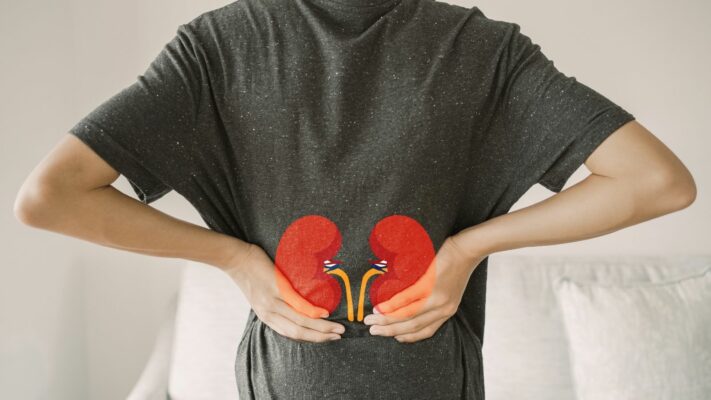
Kidney Cysts: Which Doctor or Department Should You See?
The primary medical specialties that patients [...]
Read More
13
Jul
Jul
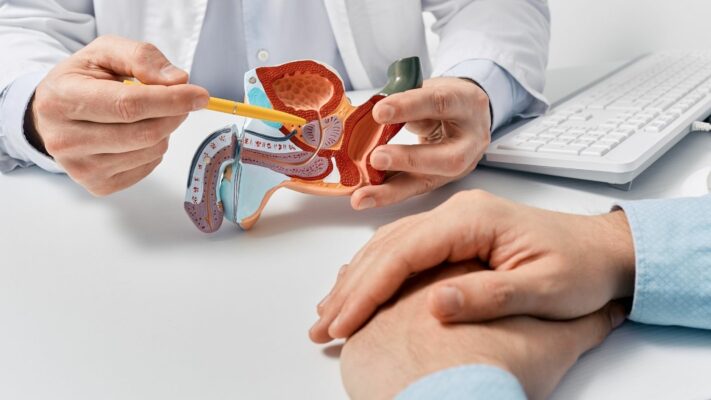
Prostate Problems: Which Doctor or Specialist Should You See?
The medical specialty that men experiencing [...]
Read More
13
Jul
Jul

Premature Ejaculation: Which Doctor Should You See for Treatment?
The first and primary medical specialty [...]
Read More
13
Jul
Jul