
 Türkçe
 Deutsch
 العربية

Benign prostate enlargement surgery is the surgical treatment applied to relieve decreased urine flow and lower urinary tract symptoms due to benign prostatic hyperplasia. It is indicated in patients who do not respond to medical treatment or who develop complications.
The transurethral resection of the prostate (TUR-P) method enables the opening of the urinary canal through the endoscopic removal of prostate tissue and is accepted as the gold standard. Risks such as bleeding, infection, and temporary urinary incontinence are managed in a controlled manner, and the hospital stay is generally short.
Laser prostate surgery techniques are based on the vaporization or enucleation of tissue using holmium or thulium laser and provide an advantage in patients with a low risk of bleeding. They offer a safe profile in individuals using anticoagulants, and catheter duration and the recovery process are shorter.
Open or robotic prostate surgery is preferred in very large prostate volumes and aims for permanent relief through complete tissue removal. In postoperative follow-up, urine flow, residual urine, and symptom scores are regularly evaluated, and quality of life improves significantly.
| What You Need to Know | Information |
| Definition | Benign prostate enlargement (Benign Prostatic Hyperplasia, BPH) is a condition that causes difficulty in urine flow as a result of the prostate gland enlarging due to non-cancerous causes. Surgical treatment is applied in patients who do not respond to drug treatment or who develop complications. |
| Purpose of the Surgery | To relieve urine flow, eliminate the obstruction at the bladder outlet, and reduce complaints such as frequent urination, waking at night to urinate, weak urine flow, and the feeling of incomplete emptying. |
| Surgical Indications | Severe symptoms continuing despite drug treatment, recurrent urinary tract infection, bladder stones, urinary retention, deterioration in kidney functions, and signs of permanent damage in the bladder. |
| Applied Surgical Methods | Transurethral resection of the prostate (TUR-P), laser prostate surgeries (HoLEP, GreenLight), open prostatectomy, bipolar resection, and plasmakinetic methods. The choice of method is determined according to prostate volume and the patient’s general condition. |
| TUR-P (Closed Surgery) | It is the most commonly applied method. By entering through the urethra, prostate tissue is fragmented and removed using electrical energy. It is preferred in medium-sized prostates. |
| Laser Methods | Vaporization or enucleation of prostate tissue is performed using laser energy. The risk of bleeding is lower and it can also be applied in large prostates. |
| Open Prostatectomy | It is surgery performed through an incision in the lower abdomen in very large prostates. Today, it is preferred less often. |
| Type of Anesthesia | It is generally performed under spinal (waist-down numbness) or general anesthesia. |
| Duration of Surgery | Depending on the selected method and prostate size, it generally lasts between 45–120 minutes. |
| Length of Hospital Stay | It varies between 1–3 days in most patients. The duration may be longer in open surgery. |
| Catheter Use | A urinary catheter is placed in the bladder after surgery. It is usually removed within 1–3 days. |
| Recovery Process | Mild burning, frequent urination, and slight bleeding may last for a few weeks. Full recovery generally occurs within 4–6 weeks. |
| Possible Risks | Bleeding, infection, urinary incontinence, retrograde ejaculation (semen flowing into the bladder), rarely erectile dysfunction, and urethral stricture. |
| Effect on Sexual Function | The most common condition is retrograde ejaculation. Erectile function is generally preserved, but it may rarely be affected. |
| Things to Consider After Surgery | Consuming plenty of fluids, avoiding heavy lifting, preventing constipation, attending regular doctor check-ups, and applying to a healthcare institution in case of signs of infection. |
| Success Rate | With appropriate patient selection, the rate of significant improvement in symptoms is high, and long-term patient satisfaction is generally good. |

Prof. Dr. Berkan Reşorlu
Urology Specialist
Urology Specialist
Prof. Dr. Berkan Reşorlu, born in Ankara in 1979, completed his medical education at Ankara University between 1997-2003 and his urology specialization at Ankara University Faculty of Medicine between 2003-2008. Academically, he received the title of associate professor in 2013 and professor in 2022.
He has carried out extensive series studies in the field of endoscopic stone surgery, introduced surgeries applied to children under 1 year of age into the literature, and gained international recognition with his stone scoring system and experimental surgical models.
What Is Benign Prostate Enlargement and Why Does It Occur in the Body?
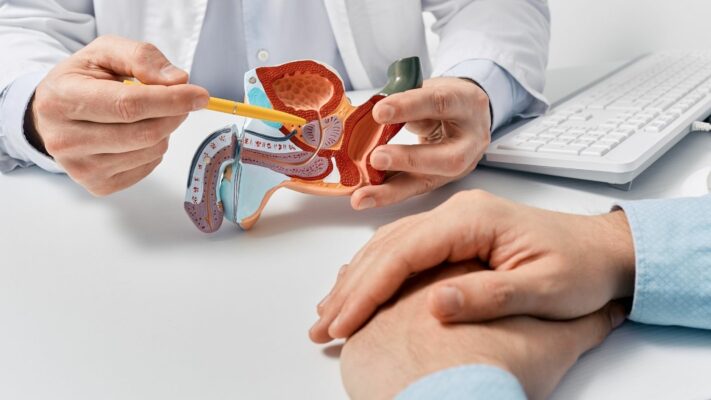
The prostate is a secretion gland, an indispensable part of the male reproductive system, located just below the urinary bladder (bladder) and surrounding the urinary canal that exits the bladder and extends toward the penis like a ring. Its main function is to form the fluid part of semen, ensuring the survival and transport of reproductive cells. This gland, which is about the size of a walnut and weighs approximately twenty grams in a healthy young man, experiences growth spurts during certain periods of life.
The first major change occurs during adolescence and doubles the gland’s volume. The second and actual long-term growth phase begins in the mid-twenties and continues very slowly but uninterruptedly until the end of a man’s life.
The underlying basic mechanism of growth is the aging process and the interaction of male hormones on the gland. When the testosterone hormone in the body enters the prostate cells, it is converted through a special enzyme into dihydrotestosterone, a much stronger and more active form. As age advances, the sensitivity of the prostate gland to this powerful hormone increases. This increase in sensitivity causes the cells in the inner parts of the prostate, especially those closest to the urinary canal, to multiply continuously. As the number of cells increases, the internal volume of the prostate expands and begins to exert physical pressure from the outside on the urinary canal passing through its center. The narrowed canal prevents urine from being expelled comfortably, and thus the disease process begins.
How Is the Bladder Muscle Affected During the Process of Benign Prostate Enlargement?
When the prostate gland begins to gradually compress the urinary canal, the body enters an incredible adaptation process to overcome this new obstacle. The urine sac, namely the bladder, is actually a flexible reservoir made up of muscles. When the canal narrows, the bladder has to contract much more strongly in order to expel urine and overcome that resistance. Just as the arm muscles of an athlete who lifts weights become enlarged and thickened over time, the muscles forming the bladder wall also thicken over time due to continuously exerting excessive effort. At first, this thickening works and the person somehow continues to urinate.
However, as months and years pass, the constantly strained bladder muscle begins to tire. The thickened bladder wall loses its former healthy flexibility and capacity to expand. The bladder that has lost its flexibility stretches immediately even when filled with a very small amount of urine and sends the signal “I need to go to the toilet” to the brain. In the final and most undesirable stage of the process, the bladder muscle gives up completely, largely loses its ability to contract, and the person becomes unable to expel urine no matter how much he strains.
What Daily Complaints Does Benign Prostate Enlargement Cause That Reduce Quality of Life?
Blockage of the urinary canal and fatigue of the bladder manifest themselves in daily life with a wide variety of annoying symptoms. These symptoms are generally divided into three main categories: storage, voiding, and post-void complaints. Storage problems arise from the bladder losing the flexibility mentioned above. The person feels the need to go to the toilet very frequently during the day. Especially having to get up to go to the toilet several times in the sweetest part of the night makes quality sleep impossible. This is the main reason for the extreme fatigue and concentration problems experienced the next day. Sometimes the feeling of needing to go to the toilet comes so suddenly and severely that the person may face the problem of urinary leakage until finding a toilet. This can turn long bus journeys, cinema, or theatre events into a nightmare.
Voiding complaints are the direct result of the prostate physically blocking the passage. When the person goes to the toilet, he notices that urination does not start immediately and that he needs to wait for a while. Urine pressure is not as strong as before, the stream has weakened, and most of the time it becomes necessary to tighten the abdominal muscles and strain to expel urine. In post-void complaints, the feeling that the urine has not completely emptied and that some urine remains behind continues to disturb the patient while leaving the toilet. Considering all these situations, the most common complaints encountered are as follows:
- Frequent urination
- Waking up at night to urinate
- Sudden urinary urgency
- Urinary incontinence
- Decrease in urine pressure
- Waiting to start urination
- Split urination
- Intermittent urination
- Feeling that the urine has not completely emptied
- Post-void dribbling
What Is Done During the Doctor’s Examination for the Diagnosis of Benign Prostate Enlargement?
When complaints begin to reduce quality of life, a correct medical evaluation is essential. The process first begins with listening to the patient in detail. The current medications used, previous surgeries, and general health condition are reviewed. Then, a special questionnaire that is applied as a standard all over the world and scores the patient’s toilet habits during the last month is filled out. This questionnaire makes it possible to objectively see whether the complaints fall into the mild, moderate, or severe category.
During the physical examination stage, a digital prostate examination is performed to understand the condition of the prostate. This examination, which many men hesitate about and postpone out of embarrassment, is actually a painless procedure that lasts only a few seconds and is of vital importance for diagnosis. Due to anatomy, the prostate is very close to the final part of the large intestine. Thanks to this examination, it is very clearly felt how much the prostate has enlarged, what its consistency is like, and whether its surface is smooth or not. If a hardened, irregular area or a nodule is noticed on the prostate during the examination, the diagnostic process is deepened because this may be the harbinger of different diseases.
Contact us now to get detailed information about treatments and to make an appointment!
What Tests Are Requested in the Diagnosis of Benign Prostate Enlargement?
Just listening and examining do not always present a complete picture; some tests showing the body’s internal dynamics are also needed. First, the PSA (Prostate Specific Antigen) level, a special protein produced by prostate cells and mixed into the blood, is measured in the blood. The creatinine value in the blood is checked to determine whether the kidneys have been damaged due to the backflow of urine. A simple urinalysis is definitely performed to check whether there are hidden conditions such as infection, bleeding, or passing sand in the urinary tract.
An extremely simple test called uroflowmetry is applied to mathematically measure how much the urine flow has deteriorated. The patient urinates normally into a specially designed computerized container, and this device draws a graph of how many milliliters per second the urine flows and whether it is interrupted. Finally, after urination is completed, the bladder is examined with an ultrasonography device to measure whether any urine remains inside and, if so, whether its amount is at dangerous levels. The basic tests performed throughout this process are as follows:
- Blood test
- Urinalysis
- Uroflowmetry
- Ultrasonography
Is There a Hidden Connection Between Benign Prostate Enlargement and Prostate Cancer?
The most feared and most widely spread misinformation in society is the belief that prostate enlargement turns into cancer over time. Benign prostate enlargement and prostate cancer are two separate conditions that are completely independent of each other and develop through different mechanisms. Enlarged prostate cells do not turn into cancer cells even as the years pass. While prostate enlargement gives symptoms by blocking the urinary tract in the inner part of the gland, prostate cancer generally begins insidiously in the outer parts of the gland close to the outer shell and most of the time does not cause any difficulty in urination in the early stages.
However, there is a very important detail here. Since both conditions generally target men aged fifty and over, both benign enlargement and a cancer tissue that has not yet shown symptoms may be present at the same time in a patient. Just because urinary complaints arise from a benign enlargement, a person should not neglect cancer screenings. Although there is no direct cause-and-effect relationship between the two, the possibility that they may coexist simultaneously in the same organ makes it mandatory not to neglect regular medical check-ups.
What Are the Medication Options Used in the Treatment of Benign Prostate Enlargement?
When complaints reach a level that disrupts the patient’s daily life, sleep, and social life, the first step is generally medication treatment. Medications basically have two different working principles. The first group of drugs helps relax the smooth muscles of the prostate and the neck of the urine sac. We can liken the prostate tissue squeezing the urinary tract to the narrow collar of a shirt that squeezes the throat too much; these drugs open the button of that collar, allowing the urinary tract to immediately expand and enabling the patient to urinate comfortably within days. However, these drugs do not reduce the physical size of the prostate; they only temporarily widen the passage, and when the effect of the drug wears off, the complaints return.
The second group of drugs focuses directly on reducing the volume of the prostate. They block the action of the enzyme that enables the testosterone hormone to convert into the active form that enlarges the prostate. In this way, cell proliferation stops and within months the prostate gland shrinks by up to twenty-five percent. Just as a sponge immersed in water gradually loses its water and shrinks, the prostate tissue becomes smaller and the physical pressure it exerts on the urinary tract disappears. In patients with a large prostate, the use of these two different drug groups at the same time carries treatment success to much higher levels.
What Are the Possible Side Effects of Medications for Benign Prostate Enlargement?
As with every medical treatment, prostate medications may also have some unwanted effects, but these side effects are generally not permanent and disappear when the treatment is stopped. Since muscle-relaxing drugs can also slightly dilate some vessels in the body, they may cause a momentary drop in blood pressure and dizziness, especially when getting out of bed suddenly in the morning. To prevent this, it is generally recommended that the medicine be taken before going to bed at night.
Since the drugs that reduce prostate size work through the hormone mechanism, they may cause a slight decrease in sexual desire with long-term use. The side effect that surprises patients the most is the condition of semen not coming out. Since the urinary tract is widened, after sexual intercourse the semen may flow backward into the urine sac behind, which is less resistant, instead of being expelled outward. This is definitely not a dangerous or harmful condition for health; the semen is later expelled together with the first urination. In general, the side effects that may be encountered are as follows:
- Dizziness
- Weakness
- Low blood pressure
- Decrease in sexual desire
- Decrease in semen amount
- Retrograde ejaculation
When Does Surgical Intervention Become Inevitable for Benign Prostate Enlargement?
While many patients can live comfortably for years with medication treatment, sometimes the process reaches a point that cannot be controlled with medication. If the complaints do not decrease despite medications or if the side effects of the medications make the person’s life difficult, surgical options are put on the table. However, there are some situations in which surgery ceases to be a preference and turns into a medical necessity.
If the bladder cannot empty urine completely and dirty urine is constantly left behind, this urine may precipitate over time and cause large stones to form in the bladder. If the urine remaining inside starts to continuously produce infection and frequently drags the patient into febrile illnesses, alarm bells are ringing. The most critical stage is when the high pressure created by the remaining urine backs up toward the kidneys and silently leads to kidney failure. Sometimes the prostate suddenly blocks the urinary tract completely, the patient becomes unable to urinate at all, and a urinary catheter has to be inserted in the emergency department. Such conditions show that surgical intervention must be performed before permanent damage occurs. The main reasons that make surgery mandatory are as follows:
- Recurrent urinary tract infections
- Deterioration in kidney functions
- Bladder stones
- Recurrent urinary bleeding
- Inability to urinate
- Necessity of catheter insertion
Which Traditional Methods Are Applied in Benign Prostate Enlargement Surgeries?
Looking at the historical process, two basic methods were used for years in benign prostate enlargement surgery. The first is closed prostate surgery, which was accepted as the gold standard for many years. In this method, the enlarged prostate tissue is entered through the urinary canal with a special camera and instrument, and it is scraped clean from the inside like small shavings with the help of electrical energy. This method, which gives successful results in not very large prostates, begins to become risky as the prostate size increases. The prolongation of the procedure duration, the increase in the amount of bleeding, and the troublesome recovery process are the weak sides of the method.
The other traditional method is open prostate surgery. In this method, which is necessarily resorted to in very large prostates, an incision is made in the patient’s lower abdominal region, the bladder is reached, and the enlarged prostate tissue is physically removed with the help of the surgeon’s finger. Since an incision is made, the recovery period is very long, hospitalization for days is required, and the risks of infection and bleeding are relatively higher, the area of use of open surgery in the modern world is narrowing more and more every day.
Contact us now to get detailed information about treatments and to make an appointment!
How Have Laser Technologies Created a Revolution in the Treatment of Benign Prostate Enlargement?
With developing medical technology, a new era has begun in prostate surgery. Especially closed surgical techniques using laser energy have eliminated the disadvantages of traditional methods. To understand the logic of how these new methods work, we can compare the prostate to an orange. The healthy membrane part outside the prostate is the peel of the orange, and the enlarged diseased tissue inside that blocks the urinary tract is the fruit part of the orange. With laser surgery, entry is made through the urinary canal and, thanks to special laser beams, the enlarged prostate tissue is completely peeled away from the outer membrane as a whole, just like separating the fruit of an orange from its peel.
This separated large tissue is pushed into the urine sac. Then, with the help of a special device, this tissue inside the bladder is minced and removed in small pieces by vacuum. Laser beams not only cut the tissue, but also instantly seal the blood vessels at the place they cut, stopping the bleeding. In this way, even enormous prostates that require open surgery can be completely cleaned in a bloodless, incision-free, and very safe manner. Patients usually get rid of their catheters the next day after surgery and return to their normal lives. Since the enlarged tissue inside is completely removed without leaving any residue, the possibility of the disease recurring years later is close to zero.
What Can Patients Expect During the Recovery Process After Benign Prostate Enlargement Surgery?
No matter how successful and high-tech the surgery is, the body needs a certain amount of time to heal itself. When the enormous tissue inside the prostate is removed, a cavity and a wide wound surface waiting to heal remain there. As urine passes through this region, in the first weeks patients may feel slight burning, stinging, or a sudden need to go to the toilet. It is a completely natural sign of healing that slight pink-colored bleeding may occasionally mix with the urine from the scabbed wound surface.
In addition, the pelvic floor muscles, which have become lazy under the pressure of the enlarging prostate for years, may not adapt immediately when the obstacle in front of them suddenly disappears. Until these muscles become stronger and the urine-holding reflexes start working again at full capacity, mild urinary leakage may be experienced for a few weeks, especially while coughing, laughing, or lifting heavy objects. The temporary conditions that may be experienced during the recovery process are as follows:
- Temporary burning in the urine
- Mild bleeding
- Short-term urinary incontinence
- Need to urinate frequently
- Sudden feeling of urgency
What Dietary Changes Should Be Made to Relieve the Complaints of Benign Prostate Enlargement?
One of the biggest supporters of the treatment process is the conscious adjustments the patient will make in daily life and eating habits. First of all, the quality and timing of fluid intake are of great importance. To avoid constantly waking up at night with the need to go to the toilet, seriously reducing fluid intake after dinner and stopping drinking water at least two hours before going to bed is a very practical but effective solution.
The inner surface of the bladder is very sensitive to some foods and beverages. Especially drinks containing intense caffeine, such as coffee, acidic foods, and alcohol, directly stimulate the urine sac, causing sudden contractions and a feeling of excessive urgency. Limiting the consumption of such irritant substances provides visible relief in complaints. In addition, in constipation, the large intestine directly presses on the prostate and bladder, making difficulty in urination even worse. To prevent this, eating a diet rich in fiber, vegetables, and fruits is of golden value for prostate health. The things that should be avoided or reduced because they may increase complaints are as follows:
- Caffeinated drinks
- Alcohol
- Acidic fruit juices
- Hot spices
- Excessively salty foods
What Should People With Benign Prostate Enlargement Pay Attention to in Their Daily Lives?
Apart from nutrition, some physical habits also help the bladder perform its function more comfortably. When going to the toilet, the “double voiding technique” can be applied to make sure that the bladder is completely empty. Not leaving the toilet immediately after urination but waiting a few minutes and then trying to urinate again is very beneficial for emptying the remaining urine. It is also important to be careful against cold weather and catching a chill, because cold weather can cause involuntary contractions of the bladder muscles and intensify the complaints.
Making special exercises that strengthen the pelvic floor muscles, based on the logic of holding and releasing urine, a daily routine increases urine control and makes it easier to cope with the feeling of sudden urgency. Moving away from a sedentary lifestyle and taking regular brisk walks every day directly has a positive effect on prostate and bladder health by regulating blood flow in the pelvic region. The practical approaches that should be taken into consideration and applied in daily life are as follows:
- Pelvic floor exercises
- Double voiding technique
- Evening fluid restriction
- Regular walking
- Protection from the cold
Although benign prostate enlargement is a natural part of aging, thanks to the wide range of medication and advanced laser surgery options offered by modern medicine, it has long ceased to be an ordeal that patients have to silently endure. What matters is reading the signals your body gives correctly, not neglecting regular check-ups, and not hesitating to get support from a specialist to determine the most suitable treatment method for you.
Blog Posts

Genital Warts: Which Doctor or Department Should You See?
When genital warts are noticed, the [...]
Read More
13
Jul
Jul
Urinary Tract Infection (UTI): Which Doctor or Department Should You Visit?
The department patients experiencing urinary tract [...]
Read More
13
Jul
Jul

Kidney Stones: Which Doctor or Specialist Should You See?
The primary specialty that patients with [...]
Read More
13
Jul
Jul
Kidney Diseases: Which Doctor or Department Should You See?
The primary medical specialty that patients [...]
Read More
13
Jul
Jul
Sexually Transmitted Diseases (STDs): Which Doctor Should You See?
The answer to the question of [...]
Read More
13
Jul
Jul
Kidney Cysts: Which Doctor or Department Should You See?
The primary medical specialties that patients [...]
Read More
13
Jul
Jul
Prostate Problems: Which Doctor or Specialist Should You See?
The medical specialty that men experiencing [...]
Read More
13
Jul
Jul

Premature Ejaculation: Which Doctor Should You See for Treatment?
The first and primary medical specialty [...]
Read More
13
Jul
Jul