
 Türkçe
 Deutsch
 العربية

Steam therapy is a supportive method that increases mucus secretion by humidifying the respiratory tract and helps open the airways. It especially contributes to the relief of symptoms in upper respiratory tract infections and reduces mucosal irritation.
Among the benefits of steam therapy are relieving nasal congestion, reducing throat dryness, and softening phlegm. The warming effect of steam facilitates the mobilization of secretions in the airways, providing more comfortable breathing.
Methods of applying steam therapy at home are generally carried out in the form of steam inhalation over a bowl filled with hot water. During this application, care should be taken against the risk of burns, and it should be applied in a controlled manner. Medical devices should be preferred when necessary.
The medical use of steam therapy is especially recommended as supportive in conditions such as sinusitis, bronchitis, and the common cold. However, it is important to consult a healthcare professional before applying it in individuals with chronic diseases or in children.
| What You Need to Know | Information |
| Definition | Steam therapy (steam inhalation) is a supportive treatment method applied by inhaling the steam produced by hot water through the respiratory tract. It is used to relieve upper respiratory tract symptoms. |
| Mechanism of Action | Warm and moist air moisturizes the nasal mucosa, reduces the viscosity of secretions, supports mucociliary clearance, and provides symptomatic relief by reducing irritation in the airways. |
| Purposes of Use | It helps reduce nasal congestion and phlegm in upper respiratory tract diseases such as the common cold, flu, sinusitis, allergic rhinitis, pharyngitis, laryngitis, and bronchitis. |
| Method of Application | Boiled and slightly cooled water is placed in a wide bowl. The patient leans their head over the bowl and inhales the steam deeply and slowly. A towel may be placed over the head to reduce the dispersion of the steam. It is applied for an average of 5–15 minutes. |
| Alternative Application | It can be applied in a controlled and safer manner with electric steam devices (nebulizer or cool/warm mist machines). |
| Session Frequency | It can be applied 1–3 times a day. The duration and frequency are adjusted according to the severity of the symptoms. |
| Possible Benefits | It provides reduced nasal congestion, increased sinus drainage, relief of throat dryness, softening of phlegm, and temporary breathing comfort. |
| Side Effects | In incorrect application, skin burns due to hot water, irritation of the face and respiratory tract, and mucosal damage due to excessively hot steam may occur. |
| Contraindications | It should not be applied unsupervised in small children. In asthma patients, excessively hot steam may trigger bronchospasm. Caution should be exercised in those with open skin lesions or severe respiratory failure. |
| Safety Precautions | Water should not be used while directly boiling, it should be applied on a stable surface, and adult supervision should be provided especially for children. Electrical devices should be used in accordance with the manufacturer’s instructions. |
| Duration of Treatment | It is generally applied for a short period during acute symptoms. Long-term and continuous use is not recommended. |
| Supportive Methods | When used together with saline nasal irrigation, adequate fluid intake, and appropriate medical treatment, symptom control may be more effective. |

Prof. Dr. Berkan Reşorlu
Urology Specialist
Urology Specialist
Prof. Dr. Berkan Reşorlu, born in Ankara in 1979, completed his medical education at Ankara University between 1997-2003 and his urology specialization at Ankara University Faculty of Medicine between 2003-2008. Academically, he received the title of associate professor in 2013 and professor in 2022.
He has carried out extensive series studies in the field of endoscopic stone surgery, introduced surgeries applied to children under 1 year of age into the literature, and gained international recognition with his stone scoring system and experimental surgical models.
What Is Benign Prostatic Enlargement and Why Has Steam Therapy Come to the Fore?
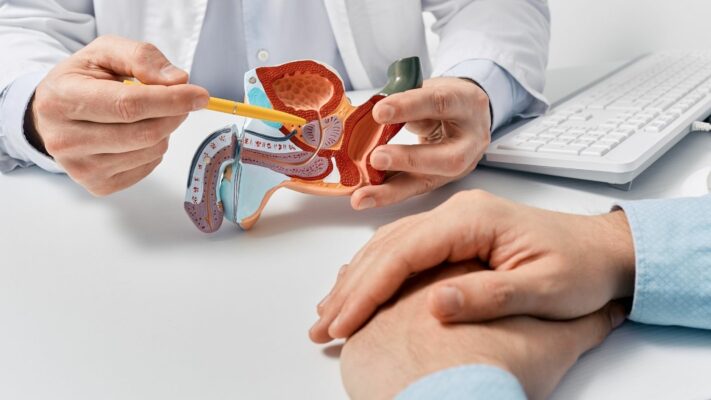
The prostate gland is a very important part of the male reproductive system and is anatomically located just below the urinary bladder, completely surrounding the canal that carries urine out of the body like a ring or a tunnel. This secretory gland, which is about the size of a walnut in youth, begins to enlarge from the age of fifty onward as a natural result of changing hormonal balances and cellular aging processes. Since this cellular proliferation does not have a cancerous character, it is called “benign.” However, because the prostate does not have a structure that can expand outward, the growing tissue is forced to press inward, that is, toward the urinary canal passing right through its center.
To visualize this, you can imagine an elastic garden hose with water flowing through it being slowly pressed from the outside. As the canal narrows, the bladder has to contract much more and exert much more effort to expel urine. Over time, the bladder muscles become tired, thicken, and lose their elasticity. For many years, to solve this problem, either medications that had to be used every day for life and sometimes caused issues such as low blood pressure were prescribed, or major surgeries requiring anesthesia, carrying a risk of bleeding, and requiring hospitalization were performed. It is precisely at this point that steam technology was developed as a much lighter but equally effective alternative in order to free patients from medication dependence and protect them from the heavy burdens of traditional surgery, and it has rapidly taken its place in the medical world.
What Are the Symptoms of Prostate Enlargement and What Complaints Are Seen Before Steam Therapy?
The mechanical obstruction of the urinary canal and the disruption of the bladder’s working dynamics cause a series of disturbing symptoms that deeply affect patients’ daily lives and seriously reduce their quality of life. This condition not only creates physical discomfort, but also leads to deep psychological stress and, over time, social isolation due to the inability to have uninterrupted sleep and the constant need to search for a toilet during the day. The main complaints that may be seen are as follows:
- Frequent urination
- Waking up at night to urinate
- Decrease in urine pressure
- Intermittent urination
- Split urination
- Dribbling urination
- Sudden urinary urgency
- Urinary incontinence
- Feeling of not being able to empty the bladder
- Straining while urinating
How Does Steam Therapy Work and What Is Its Physical Mechanism?
The biophysical mechanism underlying this revolutionary method is a natural law of physics called “convective heat transfer.” The device’s generator uses radiofrequency energy to rapidly heat a certain amount of sterile water and obtains extremely pure steam at a temperature of 103 degrees Celsius. With a very thin endoscopic camera system sent through the urinary tract, the enlarged parts of the prostate that have narrowed the canal are reached with millimetric precision. A hair-thin needle emerging from the tip of the instrument is inserted into the excessively enlarged prostate tissue, and steam is injected into this area for 9 seconds.
Since steam is in gas form, it spreads rapidly and homogeneously within seconds through the spaces between the cells in the prostate tissue. The 103-degree steam, when it comes into contact with the cooler prostate tissue, instantly condenses and turns back into liquid, that is, water. According to the laws of physics, when water changes from a gaseous state to a liquid state, it suddenly transfers the enormous latent heat energy it has stored to the tissue. This sudden energy transfer causes the problematic cells obstructing the urinary tract to instantly lose their vitality. One of the most perfect aspects of the system is that the steam can recognize anatomical boundaries. The steam cannot pass beyond the natural capsule surrounding the prostate or the surrounding tissues. The energy remains only within the prostate’s own boundaries, and thanks to this natural barrier, damage to the surrounding nerves, vessels, urinary sphincter muscles, or intestines is physically prevented.
For Whom Is Steam Therapy an Ideal Option?
Although individuals with a prostate volume between 30 and 80 grams are considered classical candidates for this procedure, successful results can also be achieved in larger-volume prostates with the advancement of technology and increasing experience. Especially if the middle lobe (median lobe) of the prostate has enlarged and extended into the bladder, this method offers an extremely practical solution. The most ideal patient groups for steam therapy are as follows:
- Young patients
- Middle-aged patients
- Those who do not want to use medication
- Those who are bothered by medication side effects
- Those who carry anesthesia risk
- Heart patients
- Lung patients
- Those using blood thinners
- Those living dependent on a catheter
Contact us now to get detailed information about treatments and to make an appointment!
How Does Steam Therapy Affect Sexual Function in Men?
One of the side effects of traditional prostate surgeries and even some strong prostate medications that concerns patients the most is their negative effect on sexual life. Especially in methods such as classical closed prostate scraping (TURP) or laser prostate removal (HoLEP), the bladder neck is opened by completely widening the inner tissue of the prostate. This anatomical change causes semen, during sexual intercourse, to flow backward into the urinary bladder instead of being expelled outward. This condition, called “retrograde ejaculation” in medical language, is seen at very high rates such as 70 to 90 percent in older methods. In addition, in some cases, temporary or permanent effects on erection quality may also occur.
Steam therapy is currently the safest and most tissue-friendly treatment option available in terms of preserving sexual functions. During the procedure, the delicate ducts that allow semen to be expelled and the sensitive muscular structures at the bladder neck are carefully preserved. Thermal energy targets only the lateral tissues that cause obstruction. Thanks to this selective and protective approach, the risk of semen flowing backward after the procedure is below 5 percent. Nearly all patients can continue their normal sexual lives naturally after the treatment, just as before the procedure, without experiencing any anatomical or physiological loss. For this reason, this method has become a primary choice especially for individuals who have an active sexual life and want to preserve it.
What Medical Preparations Should Be Made Before Steam Therapy?
In order for the application to achieve complete success and for the procedure plan to be made flawlessly, it is essential that the patient’s current condition be analyzed from multiple aspects. A series of standard examinations are performed in order to measure the extent of the complaints, determine the exact structure of the prostate, and most importantly completely eliminate any risk of a malignant tumor in the prostate. These evaluations help mathematically calculate to which points of the prostate the procedure will be applied and how many doses will be administered. The routine tests and examinations that should be performed before treatment are as follows:
- Blood tests
- Prostate-specific antigen test
- Kidney function tests
- Uroflowmetry
- Post-void residual urine measurement
- Transrectal ultrasonography
- Urinalysis
- Urine culture
What Stages Does Steam Therapy Consist of During the Procedure?
The steam therapy process is designed to offer an extremely comfortable and stress-free experience for patients. In most cases, there is no need for the patient to stay overnight in the hospital, and the procedure can easily be completed in day surgery centers or outpatient settings. After the patient meets with the anesthesiologist, mild sleepiness (sedation) or only numbing of that area (local anesthesia) is provided in the way most suitable for their general health. Since full anesthesia depth is not required, the patient experiences almost none of the grogginess, nausea, or pain created by classical surgeries during the waking phase.
In the procedure room, the prostate tissue is examined in detail on a giant screen by means of a special device advanced through the urinary canal and equipped with a high-resolution lens at its tip. The length of the canal inside and the exact locations of the narrowing are measured with millimetric precision. After the planning is completed, the small needle mechanism that will penetrate the tissue is activated. Although it varies according to the size of the prostate, steam injections are applied an average of two or three times to the right and left sides. Each steam injection lasts exactly 9 seconds when the pedal is pressed and then stops automatically. Since no cutting, burning, or scraping is performed inside, tissue integrity is not disrupted and there is no bleeding. The entire procedure is usually completed in an extremely short time of 10 to 15 minutes, and the patient is taken to bed to rest.
What Is the Recovery Process Like After Steam Therapy?
Although the procedure is a practical, bloodless, and incision-free solution, the human body has a very natural and expected cellular healing mechanism in response to the high thermal energy delivered. Immediately after the procedure, just like the swelling that occurs when any part of our body is struck, a temporary edema (swelling) forms within the prostate tissue. Since this edema may narrow the urinary tract slightly more than before in the first few days, a thin and soft urinary catheter is inserted so that patients can comfortably empty their urine. The duration for which the catheter remains in the patient generally varies between 3 and 10 days according to the initial size of the prostate and the number of injections made.
As of the day the catheter is removed, patients begin to urinate on their own, but it is still too early to expect a very strong and excellent urine stream. The gradual clearing and absorption of the cells affected by the steam by the body’s own defense system (macrophages), and the true widening and opening of the urinary tract in that region, require a certain amount of time. The first clear signs of clinical improvement and relief in urine flow generally begin to be strongly felt from the 2nd or 3rd week after the procedure. The process of the prostate fully shrinking, the bladder relaxing, and all complaints being minimized takes an average of 3 months. During this period, patients can comfortably continue their routine daily work, walks, and desk work.
Contact us now to get detailed information about treatments and to make an appointment!
What Temporary Side Effects May Be Seen After Steam Therapy?
Because the method does not go beyond the natural boundaries of the prostate and does not damage the surrounding tissues, it has an extremely high safety profile. Severe complications, bleeding requiring blood transfusion, or permanent problems such as urinary incontinence are extremely rare in the literature. However, it is extremely normal for some temporary and easily manageable conditions to arise during the healing and regeneration phase of the tissues. The expected conditions that may be encountered in the first weeks after treatment are as follows:
- Burning during urination
- Mild stinging
- Feeling of frequent urination
- Sudden need to use the toilet
- Pinkish urine
- Small blood clots
- Feeling of fullness in the groin
- Mild pelvic pain
How Is Steam Therapy Applied in High-Risk Patients?
Many elderly prostate patients also struggle with different systemic diseases at the same time. For individuals with severe heart failure, those who have recently had a heart attack and had a stent placed, those with heart valve prostheses, or those with respiratory tract diseases such as advanced COPD, receiving general anesthesia, or even numbing the lower body (spinal anesthesia), may carry life-threatening risks. Since most traditional prostate surgeries are performed by cutting or scraping the tissues, during these procedures blood-thinning medications must be stopped days in advance and other injectable treatments must be started. These medication transition processes always carry a risk of clot formation from the perspective of cardiology specialists.
One of the most applauded aspects of steam therapy in modern urology practice is that it assumes the role of a “savior” for these difficult patient groups. Since the thermal effect created by the evaporation of water instantly constricts the vessels and causes the blood to clot (coagulation), the procedure is performed with almost zero bleeding. Thanks to this miraculous feature, patients can be treated safely without discontinuing life-critical blood-thinning pills at all, or with only a very short-term minimal adjustment. Moreover, since the procedure can be performed entirely with local regional anesthesia, it becomes possible for patients with weak heart and lung functions to get rid of the urinary catheters they have been condemned to for years without experiencing anesthesia stress.
Is Steam Therapy a Permanent Solution in the Long Term?
One of the biggest question marks in patients’ minds is whether a method that lasts such a short time and in which no tissue is removed from the body can really stop prostate enlargement in the long term. The results of long-term, reliable scientific studies conducted all over the world and covering tens of thousands of patients are quite gratifying. The data of patients who underwent the procedure were followed for periods extending to five years and beyond, and the results obtained clearly proved that this method not only provides temporary relief, but also creates a permanent and physical reduction in prostate volume.
According to follow-up data, while a massive increase of more than 80 percent is seen in urine flow rate after treatment, very serious and permanent decreases have been detected in the symptom scores that impair patients’ quality of life. Once prostate cells are eliminated with thermal energy, tissue regrowth in that area is a very rare condition. At the end of five-year follow-ups, the rate of patients whose complaints restarted and who needed a second intervention or medication was only at a very low level of 4.4 percent. Moreover, even if in the following years an enlargement originating from completely different regions of the prostate occurs, there is no technical or anatomical obstacle to repeating the procedure a second time with the same safety and ease, or switching to a different surgical method according to the patient’s preference.
Blog Posts

Genital Warts: Which Doctor or Department Should You See?
When genital warts are noticed, the [...]
Read More
13
Jul
Jul
Urinary Tract Infection (UTI): Which Doctor or Department Should You Visit?
The department patients experiencing urinary tract [...]
Read More
13
Jul
Jul

Kidney Stones: Which Doctor or Specialist Should You See?
The primary specialty that patients with [...]
Read More
13
Jul
Jul
Kidney Diseases: Which Doctor or Department Should You See?
The primary medical specialty that patients [...]
Read More
13
Jul
Jul
Sexually Transmitted Diseases (STDs): Which Doctor Should You See?
The answer to the question of [...]
Read More
13
Jul
Jul
Kidney Cysts: Which Doctor or Department Should You See?
The primary medical specialties that patients [...]
Read More
13
Jul
Jul
Prostate Problems: Which Doctor or Specialist Should You See?
The medical specialty that men experiencing [...]
Read More
13
Jul
Jul

Premature Ejaculation: Which Doctor Should You See for Treatment?
The first and primary medical specialty [...]
Read More
13
Jul
Jul