Türkçe
 Deutsch

Men experiencing testicular pain should consult a urology specialist without delay to determine the underlying cause and prevent complications. Sudden-onset, severe, or post-traumatic pain requires emergency evaluation, and delay may lead to loss of testicular function.
Causes of testicular pain include infections, epididymitis, testicular torsion, varicocele, and trauma. Clinical evaluation is performed through physical examination, ultrasonography, and laboratory tests when necessary. Symptom suppression alone is not sufficient without creating a treatment plan targeting the cause.
Supportive measures that can be applied at home include rest, scrotal elevation, use of appropriate underwear, and regular use of analgesics recommended by the physician. Cold application may provide short-term relief, but prolonged or uncontrolled applications should be avoided.
Symptoms requiring emergency intervention include sudden severe pain, nausea-vomiting, scrotal swelling, and color change. These findings are critical for testicular torsion and may require surgical intervention within hours; early diagnosis is decisive for fertility and organ preservation.
Causes of Testicular Pain
Testicular pain can occur due to many different causes, and each carries a different level of medical seriousness. The severity and duration of pain, the patient’s age, and other accompanying symptoms guide the estimation of the underlying cause. Some causes require emergency intervention, while others may be milder and temporary. The most common causes can be listed as follows:
- Testicular Torsion: This is a very serious condition that requires emergency intervention, especially seen in adolescent males, in which the testicle rotates around itself and causes compression of its vessels. It is characterized by sudden, severe pain and upward retraction of the testicle. If not treated, it may lead to loss of the testicle.
- Epididymitis: It is the inflammation of the epididymal tissue behind the testicle. It mostly occurs as a result of bacterial infection. Pain may be accompanied by swelling, tenderness, fever, and burning during urination.
- Orchitis: It is the inflammation of the testicle itself. It often occurs after viral infections such as mumps and is more common in children. It progresses with swelling, pain, and fever.
- Testicular Trauma: It may develop as a result of direct blows to the testicle, sports accidents, traffic accidents, or falls. It may cause short-term, sometimes very severe pain and swelling.
- Varicocele: It is the enlargement of the veins around the testicle. It causes chronic and generally mild-to-moderate, dull pain. It becomes more noticeable especially after standing for a long time.
- Spermatocele: It is a cystic structure that develops in the sperm-carrying ducts on the testicle. It is usually small and painless; however, when it grows, it may cause pain due to pressure.
- Hydrocele: It is fluid accumulation around the testicle. Large hydroceles may cause a feeling of heaviness and indirect pain on the testicle.
- Inguinal Hernia: It occurs when intra-abdominal tissues sag downward through the inguinal canal and sometimes reach the scrotum. It may cause fullness and pain in the testicle.
- Testicular Tumors: Benign or malignant tumors developing inside the testicle usually present with a painless mass. However, pain may occur in some tumors or rapidly growing masses.
- Urinary Tract Infections and Sexually Transmitted Diseases: Especially in young and sexually active men, urinary tract inflammation may spread to the testicles and cause pain.
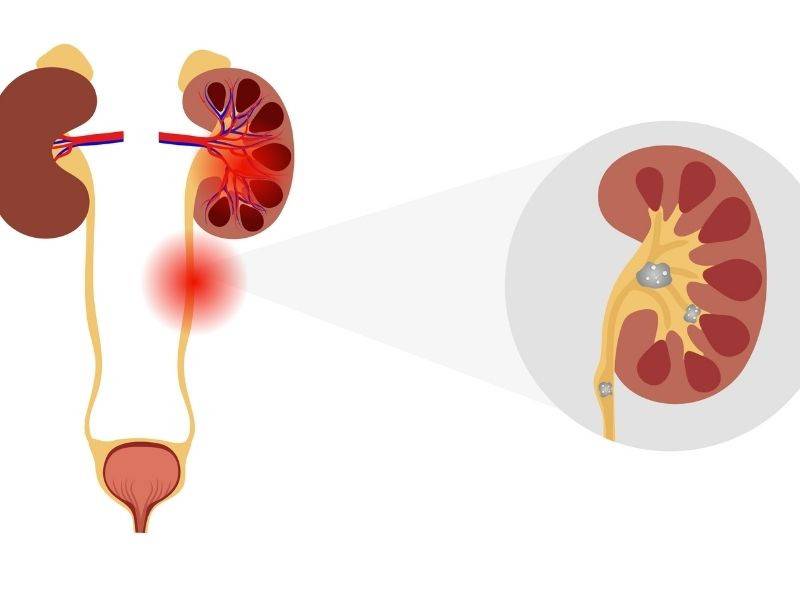
- Kidney Stones: Sometimes stones coming from the kidneys create obstruction in the urinary canal, and the pain may radiate to the testicle.
- Torsioned Hydatid Cyst or Appendix Testis: Pain and tenderness may develop when small accessory tissues around the testicle or on the upper part of the testicle twist around themselves. This condition may be confused with testicular torsion but usually progresses more mildly.
- Scrotal Filariasis or Parasites: Parasitic infections seen in tropical regions may cause chronic pain in the testicles.
- Neurogenic Pain: Nerve damage or nerve compression in the lumbar region (for example, lumbar disc herniation) may cause pain radiating from the groin to the testicles.
- Medications and Side Effects: Although rare, pain may occur in the testicles due to the side effects of some medications or after radiation.
- Psychological Causes: Especially in long-term and recurrent testicular pain where no underlying organic cause can be found, psychological factors such as stress and anxiety may also play a role.
- Post-Vasectomy Pain Syndrome: In some men who have undergone vasectomy, chronic pain may develop in the testicles months or years later.
Conditions Requiring Emergency Intervention in Testicular Pain
Some symptoms in testicular pain may be of vital importance and may require applying to the emergency department without delay. The leading condition is testicular torsion. In testicular torsion, the vessels of the testicle twist and the blood flow to the testicle completely stops. This condition causes the testicle to lose its viability within hours. If you encounter the following conditions, you must apply to an emergency healthcare institution without delay:
- Sudden and Severe Pain,
- Swelling and Redness,
- High Fever,
- Nausea and Vomiting,
- If hardness or excessive tenderness is felt when touched by hand.
Such symptoms may be signs of conditions requiring emergency medical intervention, such as testicular torsion, serious infections (for example, orchitis or epididymitis), or trauma. Especially in sudden-onset testicular pain in young people, torsion, which is the worst-case scenario, should always be considered and a doctor should be consulted as soon as possible.
Except for mild pain that resolves on its own, if the pain is severe and long-lasting, it is absolutely necessary not to wait. Early intervention both prevents loss of the testicle and protects reproductive health in the long term.
Which Complaints Occur Together With Testicular Pain?
Some symptoms accompanying testicular pain may be very helpful in understanding the type of underlying disease and in helping the doctor make a diagnosis. Most of the time, there is not only pain; other complaints are also added to the clinical picture. These symptoms are listed below:
- Swelling: An increase in the volume of the testicle or scrotum may be seen. Swelling may sometimes be only on one side and sometimes on both sides.
- Redness and Warmth: Redness, increased warmth, and tenderness may develop on the scrotal skin.
- Discharge: Especially in inflammatory diseases of the epididymis and testicle, discharge from the tip of the penis may be seen.
- Urinary Problems: In addition to testicular pain, problems such as burning sensation during urination, frequent urination, or difficulty urinating may also occur.
- Hardness in the Skin and Prominent Veins: In vascular enlargements such as varicocele, soft, worm-like structures may be felt around the testicle.
- General Weakness and Fever: In infection-related conditions, fever, chills, shivering, and weakness may be seen.
The presence of these findings may indicate the seriousness of testicular pain.
How Is Testicular Pain Diagnosed?
Making the correct diagnosis in testicular pain is very important for the success of treatment and preservation of the testicle. First, a detailed history is taken. The physician learns when the pain started, its severity, duration, other accompanying findings, and the patient’s history of trauma or infection. Then, a physical examination is performed. The structure, size, tenderness of the testicle, and the presence of swelling and redness are evaluated.
One of the most important auxiliary tests in the diagnostic process is testicular ultrasonography. Ultrasound shows the vascular structure and internal tissues of the testicle in detail. It is of vital importance especially in distinguishing diseases such as testicular torsion, varicocele, tumor, or cyst. Demonstrating testicular blood flow with ultrasound is necessary to rule out torsion.
Laboratory tests are also used in diagnosis. The presence of infection is understood through blood tests. Urinalysis may show urinary tract infection. In some cases, semen analysis or advanced imaging methods (CT, MRI) may be required.
What Can Be Done at Home for Testicular Pain?
Most men experiencing testicular pain seek relief with some methods at home before going to the doctor. However, the most important point to remember here is that testicular pain may also be due to serious causes. Still, in cases with a known clear cause such as mild and sudden trauma, or temporarily until reaching a doctor, the following methods may be used:
- Rest: Resting and avoiding heavy activities help relieve pain.
- Cold Application: An ice pack wrapped in a clean cloth can be applied to the scrotal area for 10–15 minutes several times a day. This helps reduce swelling and pain.
- Supportive Underwear: Using supportive but not overly tight underwear that limits movement of the testicle may reduce pain, especially when standing.
- Warm Shower: In some patients, taking a warm shower may help relax the muscles and provide mild relief.
- Some men experiencing testicular pain may turn to wrong practices before consulting a doctor. These mistakes may lead to both delayed diagnosis and damage to the testicle. The following mistakes in particular should be avoided:
- Self-Medication: Antibiotics or prescription medications should not be used without a doctor’s recommendation. Incorrect medication use may cause the disease to progress.
- Ignoring the Pain: Thinking “it will pass” and allowing the pain to continue for days would be a major mistake. Especially in severe or sudden pain, waiting may lead to loss of the testicle.
- Excessive Massage or Harsh Applications to the Area: Applying excessive pressure or massage to the testicle may lead to trauma and worsen the condition.
- Relying on Alternative or Herbal Methods: Practices whose accuracy has not been scientifically proven should be avoided.
- Hot Application: If there is swelling or redness, applying heat may worsen the condition further.
- Hiding the Pain: Especially in children and young people, hiding the pain may cause delayed consultation with a doctor.
How Does Testicular Pain Go Away?
Testicular pain may occur due to very different causes, and the treatment of each disease is different from the others. Below, you can find the treatment methods applied for pain caused by the most common testicular diseases:
- Testicular Torsion: Testicular torsion is the condition in which the testicle rotates around itself, causing compression of its vessels and stopping blood flow. It usually begins suddenly and with very severe pain in young men. This condition requires emergency intervention. Delay in treatment may lead to loss of the testicle.
The main aim of treatment is to restore the blood supply of the testicle as soon as possible. The patient is taken to surgery urgently. During surgery, the testicle is returned to its original position and the vessels are opened. Usually, both testicles are fixed to the scrotum to prevent torsion from recurring in the future. If the testicle has lost its viability, it may need to be removed. Recovery after surgery is rapid, and with early intervention the testicle is often saved.
- Epididymitis and Orchitis (Inflammation of the Testicle or Epididymis): Epididymitis and orchitis are infections of the testicle or the epididymal tissue behind the testicle. In addition to pain, swelling, redness, and sometimes fever may be seen. In treatment, antibiotics appropriate to the source of the infection are used. Painkillers and anti-inflammatory drugs support the treatment. Resting, applying cold to the scrotum, and using supportive underwear accelerate recovery. If the infection is sexually transmitted, partner treatment may also be recommended. In severe cases, intravenous antibiotic treatment and hospitalization may be required.
- Testicular Trauma: In pain that occurs after blows to the testicle, sports accidents, or falls, it is first evaluated whether there is serious damage to the testicle. In mild cases, resting, cold application, and taking painkillers are sufficient. If there is rupture, bleeding, or major swelling in the testicle, surgical intervention may be required. In this case, bleeding control and repair of the testicle are ensured. In most mild traumas, recovery is completed within a few days.
- Varicocele: Varicocele is the enlargement of the veins around the testicle. It usually causes mild and persistent pain in the left testicle. In treatment, only regular follow-up and supportive underwear are recommended in mild cases. If pain continues, infertility or loss of testicular volume develops, varicocelectomy is performed surgically. With this operation, enlarged veins are ligated and the pressure on the testicle is eliminated.
- Spermatocele and Hydrocele: Spermatocele is the formation of a small cystic structure in the testicle; hydrocele is fluid accumulation around the testicle. In these conditions, pain is usually mild. If the cyst or fluid accumulation is very large and causes discomfort, it may need to be surgically removed. For small and painless ones, follow-up alone is usually sufficient. After surgical treatment, patients recover in a short time.
- Inguinal Hernia: Inguinal hernia is the sagging of intra-abdominal organs downward through the inguinal canal, sometimes toward the scrotum. A pulling sensation and pain may be felt in the testicles due to the hernia. The treatment of inguinal hernia is always surgical. With surgery, the hernia sac and its contents are placed back into the abdomen and the area is reinforced. After hernia surgery performed with an open or closed method, the pain disappears and patients recover in a short time.
- Testicular Tumors: Testicular tumors mostly appear as a painless mass; however, sometimes they may also cause pain and a feeling of heaviness. When a painful or painless hardness or swelling that can be felt in the testicle is noticed, a urology specialist should be consulted without delay. In treatment, the testicle must first be surgically removed (radical orchiectomy). Depending on the type of tumor, chemotherapy, radiotherapy, or advanced surgical procedures may also be required. Early diagnosis significantly increases treatment success.
- Mumps Orchitis: Testicular inflammation (orchitis) may develop after mumps disease experienced in childhood. Antibiotics are not used in this condition because the cause is viral. The basis of treatment consists of rest, antipyretics and painkillers, cold application, and supportive underwear. Most patients recover within a few weeks.
- Chronic Testicular Pain (Idiopathic or Functional Pain): Sometimes chronic and continuous pain may develop in the testicles without an obvious disease. In this case, treatment is mostly aimed at relieving symptoms. Painkillers, anti-inflammatory drugs, physical therapy applications if necessary, and psychological support are recommended. In addition, using underwear that supports the testicle may also help control the pain. The patient’s condition is monitored with regular follow-up, and additional treatments are planned if necessary.

Prof. Dr. Berkan Reşorlu, born in Ankara in 1979, completed his medical education at Ankara University between 1997 and 2003, and his specialization in urology at Ankara University Faculty of Medicine between 2003 and 2008. Academically, he received the title of associate professor in 2013 and professor in 2022.
He has conducted extensive case series studies in the field of endoscopic stone surgery, contributed surgeries performed on children under the age of 1 to the literature, and has gained international recognition with his stone scoring system and experimental surgical models.