Türkçe
 Deutsch

Urination is a vital function of the human body in terms of removing waste substances and maintaining fluid balance. However, disruptions that occur in this natural process can seriously affect quality of life both physically and psychologically. Voiding disorders refer to a group of diseases characterized by functional or structural problems occurring in the urination pattern. These disorders, which can be seen in women, men, and children for different reasons, may even threaten kidney health when not detected in time. Voiding disorders, which can be controlled in most cases with early diagnosis and appropriate treatment, are among the issues that modern medicine emphasizes.
What Are Voiding Disorders?
Voiding disorders are a group of functional or structural health problems that occur when the urination process deviates from normal. Even a small disruption in the complex system in which the bladder, urinary tract, nervous system, and muscles work in harmony can affect the urination process. This condition sometimes manifests as urinary incontinence and sometimes as inability to empty the urine completely.
The act of urination plays an important role in maintaining the body’s fluid balance. Urine produced in the kidneys accumulates in the bladder and is expelled at the appropriate time. If any coordination disorder develops in this system, the person may have difficulty holding urine or, conversely, may not be able to urinate. In both cases, a voiding disorder is present.
These disorders may cause not only physical but also psychological effects. Especially in children and elderly individuals, emotional consequences such as social isolation, embarrassment, and loss of self-confidence are quite common. Although voiding disorders are a condition that anyone can experience regardless of gender, they are more common in certain age groups and health conditions.
Voiding disorders are not a disease on their own; they are usually a symptom of another underlying problem. Therefore, both urological and neurological evaluation are required to make the correct diagnosis. With early diagnosis and appropriate treatment, it is a health problem that can be completely corrected in most cases.
What Is the Importance of Voiding Disorders?
Although voiding disorders are seen by many people only as a temporary condition, serious medical causes may actually underlie them. Impairments in bladder function can directly affect the health of the kidneys. Long-term urinary retention, meaning the accumulation of urine in the bladder, can create back pressure in the kidneys and may progress to kidney failure over time.
In addition, the inability to empty urine properly from the body creates a suitable environment for bacteria to multiply. This causes recurrent urinary tract infections. This risk is higher especially in women due to the short urethra.
Another importance of voiding disorders is their effect on quality of life. When a person experiences problems such as a constant urge to urinate, waking up from sleep at night, urinary incontinence, or not being able to reach the toilet, they withdraw from social life. This situation can create serious psychological pressure in work, school, or private life.
Voiding disorders seen in children are usually associated with loss of self-confidence, shyness, and decreased school success. In adults, the risk of developing depression and anxiety increases. Therefore, voiding disorders should be handled not only as a physical problem but as a holistic health problem.
From a medical perspective, early intervention is critically important to prevent possible permanent damage. Especially in disorders originating from the nervous system, such as neurogenic bladder, early treatment protects the urinary tract. For this reason, voiding disorders are a condition that healthcare professionals must take seriously.
What Are the Types of Voiding Disorders?
Voiding disorders are evaluated within a very wide spectrum. They are basically classified according to problems experienced during the filling and emptying phases of the bladder. The most common types include urinary incontinence, overactive bladder, difficulty urinating, and neurogenic bladder.
Urinary incontinence is the condition in which a person cannot control urine. Stress-type incontinence usually occurs as involuntary urine leakage when intra-abdominal pressure increases during coughing, laughing, or heavy lifting. Urge-type incontinence occurs with a sudden, strong urge to urinate. In this condition, the person often leaks urine before reaching the toilet.
Overactive bladder is characterized by involuntary contraction of the urinary bladder. In these people, symptoms such as frequent urination, waking up at night to urinate, and sudden urge to urinate are seen.
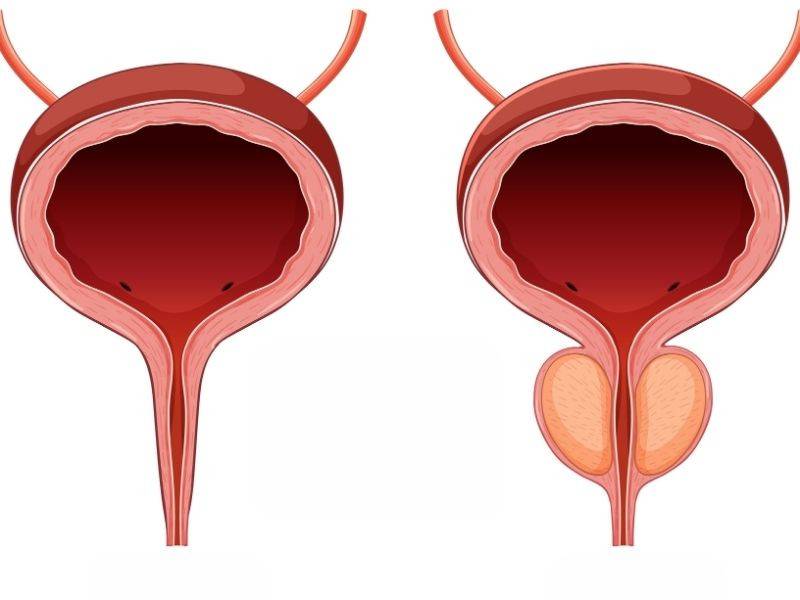
Difficulty urinating usually results from prostate enlargement, bladder outlet obstruction, or urinary tract strictures. Urine flow weakens, urination time becomes prolonged, and the bladder cannot empty completely.
Neurogenic bladder is a condition that occurs as a result of nervous system diseases. Diseases such as spinal cord injuries, multiple sclerosis, Parkinson’s, or diabetic neuropathy may impair the control of nerves over the bladder. In this condition, the person may not be able to hold urine or may not be able to empty it completely.
Each of these types occurs for different reasons, and the treatment approach is determined accordingly. For accurate diagnosis, urological examination, bladder function tests, and imaging methods are evaluated together.
What Are the Causes of Voiding Disorders?
The causes of voiding disorders are quite diverse and usually arise from the interaction of more than one factor. Anatomical, neurological, infectious, and psychological causes are among the most common factors.
Among anatomical causes, bladder neck strictures, urethral strictures, or prostate enlargement stand out. Especially in men, enlargement of the prostate gland with age can make urine flow difficult. In women, weakening of the pelvic floor muscles may lead to urinary incontinence together with childbirth, hormonal changes, or aging.
Neurological causes result from disorders in the central or peripheral nervous system. Conditions such as spinal cord injuries, brain tumors, multiple sclerosis, Parkinson’s, and diabetic neuropathy impair the neural control of the bladder. In this condition, the person may not feel the urge to urinate or the bladder may not empty completely.
Infections are also one of the important causes of voiding disorders. Especially urinary tract infections cause irritation in the bladder wall and manifest with symptoms such as frequent urination, burning, and urinary incontinence.
Psychological factors are seen more frequently especially in children and young adults. Stress, anxiety, fear, or traumatic events may temporarily disrupt bladder control. In this condition, even if there is no physical cause, the person may experience urinary incontinence or difficulty urinating.
Hormonal changes, especially in postmenopausal women, lead to decreased pelvic muscle tone due to reduced estrogen levels and may affect voiding functions.
Finally, some medications (for example diuretics, antidepressants, or antihypertensives) may cause voiding disorders by changing urine volume or bladder muscle tone.
What Are the Symptoms of Voiding Disorders?
Although the symptoms of voiding disorders vary depending on the underlying cause, they usually occur with similar complaints. The most commonly observed symptom is difficulty during urination or urinary incontinence. In addition, frequent urination, sudden urge to urinate, waking up at night to urinate, weakening of urine flow, and a feeling of incomplete emptying of urine are also common.
Some patients complain of burning, pain, or dribbling during urination. These symptoms are more pronounced especially if a urinary tract infection accompanies the condition.
If voiding disorders progress, urinary retention may develop; in other words, urine accumulates in the bladder and cannot be expelled. In this condition, swelling, pain, and discomfort occur in the abdomen.
Long-term urine accumulation may affect kidney functions and lead to serious health problems.
Waking up at night to urinate (nocturia) is also an important symptom. It is especially common in elderly individuals and seriously disrupts sleep quality.
In children, symptoms usually manifest as daytime or nighttime bedwetting, postponing going to the toilet, restlessness, and concentration problems.
How Are Voiding Disorders Diagnosed?
The diagnosis of voiding disorders requires a detailed medical evaluation. Because such disorders usually result from the interaction of more than one system. In the diagnostic process, the patient’s history is first taken. At this stage, details such as frequency and amount of urination, number of times waking at night to urinate, urinary incontinence status, burning or pain sensation are of great importance. In addition, the medications used by the patient, previous surgeries, and existing chronic diseases are also evaluated.
Physical examination is the second step of the diagnostic process. Pelvic examination is performed in women, and prostate examination is performed in men. These evaluations are guiding in understanding whether there is an anatomical problem.
Laboratory tests are used to support the diagnosis. Urinalysis and culture can reveal the presence of infection. In addition, kidney function tests show the effect of urine accumulation on the kidneys.
Among more advanced diagnostic methods are urodynamic tests. These tests measure pressure and muscle activity during the filling and emptying phases of the bladder. Urodynamic examination is extremely valuable especially when neurogenic bladder or overactive bladder is suspected.
Imaging methods also play an important role in diagnosis. Ultrasonography is used to evaluate the fullness of the bladder, whether there is enlargement in the kidneys, and urinary backflow (reflux). In some cases, the nervous system and urinary tract are examined in more detail with magnetic resonance imaging (MRI) or computed tomography (CT).
For the diagnosis of voiding disorder in children, behavioral observations are sometimes also performed. The evaluation is completed by considering toilet habits, fluid intake pattern, and psychological factors.
As a result, the diagnosis of voiding disorders cannot be made with a single test. Clinical examination, laboratory, and imaging results must be brought together. When the correct diagnosis is made, the treatment process becomes more targeted and successful.
In Which Age Groups Are Voiding Disorders More Common?
Although voiding disorders can be seen at any age, they occur more frequently in certain periods. These periods are generally childhood, adulthood, and old age. Different causes and symptoms stand out in each age group.
Voiding disorders in children are often due to developmental and behavioral causes. Urinary incontinence is common especially in children between the ages of 5-7. This condition is related to the nervous system development not being fully mature or toilet training not being given properly. In some children, nighttime urinary incontinence (nocturnal enuresis) may also be triggered by psychological stress, sibling jealousy, or school adjustment problems.
Voiding disorders are less common during adolescence, but in some young people, bladder irritation may develop as a result of urine-holding habits or excessive fluid consumption. Although this condition is temporary, if it recurs, it may disrupt the balance of bladder muscles.
In adults, voiding disorders usually result from anatomical or functional causes. In men, prostate enlargement, urethral strictures, and bladder outlet obstructions are the most common causes. In women, postpartum pelvic muscle weakness, hormonal changes, and postmenopausal estrogen deficiency are among the main causes of voiding disorders.
In old age, the frequency of voiding disorders increases significantly. The reason for this is decreased bladder muscle tone with aging, reduced nerve conduction speed, and the effect of chronic diseases. In addition, some medications used in elderly individuals (for example antihypertensives, antidepressants) may negatively affect bladder functions.
Therefore, voiding disorders occur for different reasons according to age group, but they can be controlled with proper evaluation and appropriate treatment at any age.
Treatment of Voiding Disorders
The treatment of voiding disorders is determined according to the underlying cause. A single treatment method is not effective in all patients. The treatment process generally includes medication, behavioral therapy, surgical intervention, and lifestyle changes.
The first step is usually lifestyle adjustments. Patients’ fluid consumption, caffeine intake, toilet habits, and weight are reviewed. Excessive fluid intake or excessive consumption of caffeinated beverages may stimulate the bladder and increase the frequency of urination. Establishing the habit of going to the toilet regularly is very important for bladder training.
Medication is preferred especially in overactive bladder and urge-type incontinence. Anticholinergic or beta-3 agonist drugs relax the bladder muscles and reduce the sudden urge to urinate. In urination difficulties due to prostate enlargement, alpha blockers and 5-alpha reductase inhibitors may be effective.
Among behavioral treatments, pelvic floor exercises (Kegel exercises) hold an important place. These exercises help strengthen the muscles that enable urine retention. They are especially effective in postpartum women and elderly individuals.
Surgical treatment is considered when medications or behavioral methods are insufficient. In women, vaginal sling operations may be performed for prolapse or urinary incontinence problems. In men, transurethral prostate resection (TURP) may be applied if there is obstruction in urine output due to prostate enlargement.
In neurogenic bladder treatment, permanent urinary catheter or intermittent catheterization may sometimes be required. These methods reduce the risk of infection by ensuring complete emptying of the bladder.
The success of treatment is directly related to improving the patient’s quality of life. Therefore, patient education, regular follow-up, and psychological support are of great importance throughout the treatment process.
Are Infections a Cause of Voiding Disorders?
Yes, infections are one of the most common causes of voiding disorders. Especially urinary tract infections (UTIs) disrupt the normal urination pattern by causing irritation in the bladder wall. In this condition, the person feels the urge to urinate frequently, feels burning during urination, and may sometimes experience urinary incontinence.
Infections are usually bacterial and are mostly caused by intestinal bacteria such as Escherichia coli. In women, because the urethra is short, it is easier for these bacteria to reach the bladder, so women are affected much more frequently than men.
When urinary tract infections are not treated, bacteria can reach the kidneys. This condition is called pyelonephritis and may lead to serious health problems. In addition, recurrent infections may cause chronic voiding disorders by creating permanent irritation in the bladder muscles.
In some patients, voiding problems may continue even after the infection has passed. The reason for this is that the bladder becomes hypersensitive after infection. This condition is called “post-infectious bladder irritability”.
Therefore, urinalysis must be performed in people with voiding disorder complaints, and whether there is an infection should be investigated. Early treatment both eliminates symptoms and protects kidney health.
What Is the Difference Between Voiding Disorders and Overactive Bladder?
Voiding disorders are a broad concept and include many different conditions. Overactive bladder is a specific type included within voiding disorders. The difference between the two is the source and scope of the symptoms.
Overactive bladder is characterized by frequent urination, sudden urge to urinate, and sometimes urinary incontinence as a result of involuntary contractions of the bladder. However, there is usually no structural disorder in this condition. The bladder muscle is more sensitive than normal, and contraction begins even before the urinary bladder is fully filled.
Voiding disorders include both overactive bladder and other urination problems. For example, urinary retention, difficulty urinating, neurogenic bladder, or stress-type incontinence are also included within voiding disorders. In other words, overactive bladder is a subgroup of voiding disorders.
In overactive bladder, a sudden feeling of urgency and waking up at night to urinate are usually prominent, while different symptoms may be seen in other voiding disorders. For example, in voiding disorder due to prostate enlargement, urine flow is weak, while in overactive bladder, urine flow is normal.
There is also a difference in terms of treatment. While medications and behavioral therapies are effective in overactive bladder treatment, surgical intervention may be required in voiding disorders due to mechanical obstructions.
As a result, every overactive bladder is a voiding disorder, but not every voiding disorder is overactive bladder. Understanding this difference correctly plays a fundamental role in determining the treatment approach.

Prof. Dr. Berkan Reşorlu, born in Ankara in 1979, completed his medical education at Ankara University between 1997 and 2003, and his specialization in urology at Ankara University Faculty of Medicine between 2003 and 2008. Academically, he received the title of associate professor in 2013 and professor in 2022.
He has conducted extensive case series studies in the field of endoscopic stone surgery, contributed surgeries performed on children under the age of 1 to the literature, and has gained international recognition with his stone scoring system and experimental surgical models.