
 Türkçe
 Deutsch
 العربية

The prostate is a gland located below the bladder in the male reproductive system and produces a portion of the seminal fluid; due to its position surrounding urine flow, it may lead to lower urinary tract symptoms in cases of enlargement or inflammation and requires regular clinical evaluation.
Symptoms of prostate enlargement are characterized within the scope of benign prostatic hyperplasia by frequent urination, nocturia, weak urine stream, and a feeling of incomplete emptying; in advanced cases, bladder functions may be affected and quality of life may significantly decrease.
Prostate cancer risk factors are associated with advanced age, family history, genetic predisposition, and hormonal effects; it may not present symptoms in early stages, therefore screening methods such as PSA measurement and digital rectal examination have diagnostic value in appropriate patients.
Treatment methods for prostate inflammation include antibiotics, anti-inflammatory drugs, and lifestyle modifications according to acute and chronic prostatitis types; the appropriate treatment plan is individualized according to the duration of symptoms, etiology, and the patient’s clinical condition.
| What You Need to Know | Information |
| Definition | The prostate is a walnut-sized gland belonging to the male reproductive system, located just below the bladder and surrounding the initial part of the urethra. It produces prostate fluid, which plays a role in reproductive function. |
| Anatomical Location | It is located below the bladder, in front of the rectum, and surrounds the urethra. Due to this position, its enlargement may affect urination function. |
| Function | It produces part of the fluid component of semen. This fluid nourishes sperm cells, protects them, and helps increase their motility. |
| Structural Parts | It is divided into anatomical zones: peripheral zone (where cancers most commonly develop), central zone, transitional zone (where benign prostate enlargement is most commonly seen), and anterior fibromuscular stroma. |
| Common Diseases | Benign Prostatic Hyperplasia (BPH), Prostatitis (inflammation), and Prostate Cancer are the most common prostate diseases. |
| Benign Prostatic Hyperplasia (BPH) | It is the benign enlargement of the prostate, especially seen in men over the age of 50. It may cause symptoms such as weakened urine flow, frequent urination, and nocturia. |
| Prostatitis | It is inflammation of the prostate gland. It has bacterial and non-bacterial types. It may present with symptoms such as lower abdominal pain, groin pain, painful urination, and fever. |
| Prostate Cancer | It is one of the most common cancers in men. It usually progresses slowly, but some types may be aggressive. It may not present symptoms in the early stages. |
| Risk Factors | Advanced age, family history, genetic predisposition, hormonal factors, and some environmental factors may pose a risk for prostate diseases. |
| Symptoms | Symptoms may include difficulty urinating, weak urine flow, frequent urination, waking up at night to urinate, burning during urination, and the presence of blood in semen or urine. |
| Diagnostic Methods | Digital rectal examination (DRE), Prostate Specific Antigen (PSA) test, ultrasonography, magnetic resonance imaging (MRI), and biopsy may be used for diagnosis. |
| Treatment Options | They vary according to the type of disease. Methods such as drug therapy, antibiotics (in prostatitis), hormone therapy, radiotherapy, surgical intervention, and active surveillance may be applied. |
| Preventive Measures | Regular health check-ups, healthy nutrition, physical activity, avoiding smoking, and regular PSA monitoring in at-risk individuals are recommended. |

Prof. Dr. Berkan Reşorlu
Urology Specialist
Urology Specialist
Prof. Dr. Berkan Reşorlu, born in Ankara in 1979, completed his medical education at Ankara University between 1997-2003 and his urology specialization at Ankara University Faculty of Medicine between 2003-2008. Academically, he received the title of associate professor in 2013 and professor in 2022.
He has carried out extensive series studies in the field of endoscopic stone surgery, introduced surgeries applied to children under 1 year of age into the literature, and gained international recognition with his stone scoring system and experimental surgical models.

What Is Benign Prostate Enlargement and How Does It Affect the Body?
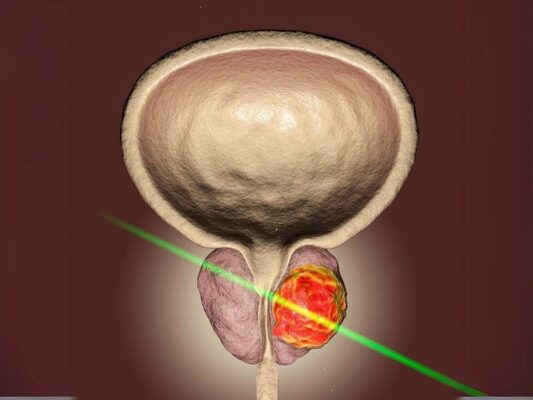
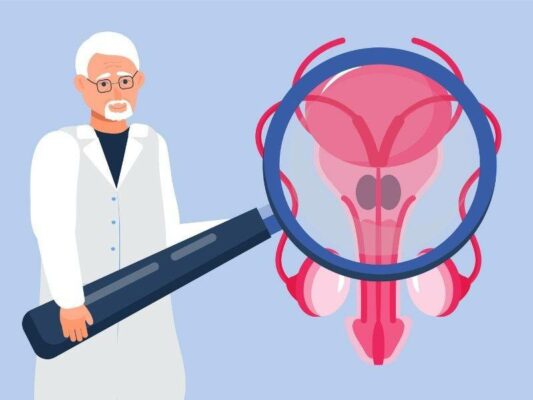
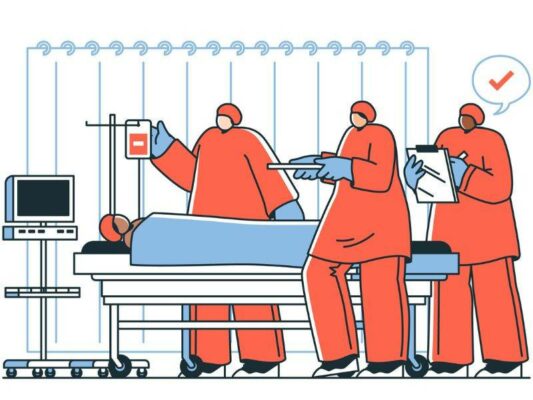
The prostate is a gland located just below the bladder in men, surrounding the urinary canal and producing secretions that assist reproduction. Its size is approximately that of a walnut in a young man. However, with advancing age, especially from the late forties onward, the cells in the inner part of this gland begin to multiply slowly. This proliferation process is not the production of cancer cells; it is a completely benign growth and is referred to in medical terminology as Benign Prostatic Hyperplasia.
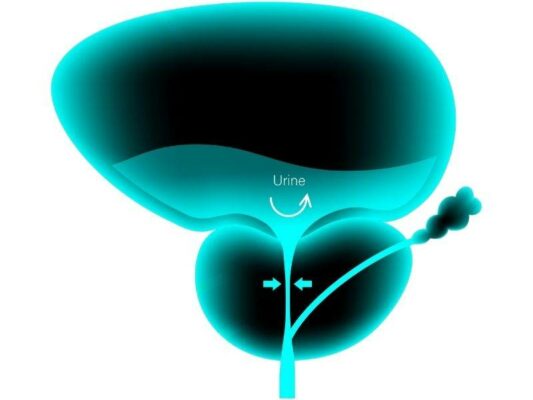
The growth can occur outward, but the main problem arises from inward growth. As the prostate grows inward, it begins to compress the urinary canal passing through its center. This compression causes the bladder to exert much more effort than normal to expel urine. Over time, the bladder muscle thickens and becomes fatigued in order to overcome this resistance. The bladder, which loses its flexibility, eventually begins to fail to empty urine. This condition marks the beginning of a cycle that deeply affects daily life and must be taken seriously.
What Complaints Does Benign Prostate Enlargement Cause?
The physical obstruction in the urinary canal and the strain on the bladder bring about a series of complaints that gradually reduce patients’ quality of life. These conditions, which are initially very mild and often ignored as a natural result of aging, eventually turn into major stress that disrupts sleep and forces individuals to constantly search for toilets in social environments. The feeling of not being able to completely empty the bladder creates continuous discomfort.
The main complaints that patients struggle with most in their daily lives and that lead them to seek medical support are as follows:
- Frequent urination
- Waking up at night to urinate
- Weak urine pressure
- Delay in starting urination
- Intermittent urination
- Dribbling urine
- Sudden urge to urinate
- Feeling of incomplete emptying
Which Methods Are Used to Diagnose Prostate Enlargement?
The diagnostic process begins with listening to complaints, but a series of medical tests are required to objectively evaluate the severity of the condition. First, standard questionnaires measuring the severity of the patient’s symptoms are completed. Then, various measurements are performed to examine the size and structure of the prostate and the condition of the bladder. The urine flow test calculates the speed and strength of the flow in milliliters as the patient urinates into a special device. With ultrasonography, both the volume of the prostate is measured with millimetric precision and the amount of urine remaining in the bladder after urination is determined. In addition, blood values are examined to understand whether there is a malignant condition.
The basic examinations routinely requested in the diagnostic process are as follows:
- Prostate specific antigen test
- Urinalysis
- Urine culture
- Kidney function tests
- Urine flow test
- Urinary system ultrasonography
When Does Surgical Treatment Become Necessary in Prostate Diseases?
When prostate enlargement is detected, the first step is not always surgery. In most cases, various drug treatments are used to relieve the patient’s complaints and relax the urinary canal. However, since the prostate is a dynamic tissue that continues to grow, medications may become insufficient over time. Surgical options come to the agenda in individuals whose complaints do not improve despite medication, who experience insomnia, and whose quality of life decreases.
In addition, in some special cases, immediate surgical intervention is a medical necessity. This is because the obstruction has the potential to cause serious damage extending to the kidneys. The conditions that definitively require surgical intervention are as follows:
- Complete urinary obstruction
- Necessity of catheter use
- Recurrent urinary tract infections
- Clotted bleeding in urine
- Bladder stone formation
- Signs of kidney failure
How Has HoLEP Technology Created a Revolution in Prostate Treatment?
Holmium Laser Prostate Enucleation, or HoLEP, is a tremendous technology developed in recent years that has almost completely replaced traditional open prostate surgeries. In the past, closed surgery could not be performed on patients with prostate volumes above 80 or 100 grams, and open surgery had to be performed by making an incision in the abdomen. HoLEP technology has eliminated this necessity.
The procedure is performed entirely with a closed method by entering through the urinary canal. The high-tech laser used has a special wavelength that is highly absorbed by water. This feature allows the laser to affect only half a millimeter in depth while cutting tissue. In other words, the surgeon uses the laser like a very precise scalpel to separate tissues without causing any damage to the healthy tissues beneath. At the same time, since the laser energy seals (coagulates) the tissue with heat at the moment it cuts, the amount of bleeding during surgery is almost negligible compared to older methods.
How Is Prostate Surgery Performed With the HoLEP Method?
To understand the logic of this surgery, it is helpful to think of an orange. The enlarged part of the prostate that blocks the canal is like the fruit of the orange, while the healthy capsule tissue surrounding it is like the peel. In classical scraping surgeries, the fruit of the orange is removed piece by piece from the inside, and there is a high possibility that some fruit remains on the peel. In HoLEP surgery, however, the enlarged tissue is completely separated from the outer capsule in one piece with the help of a laser.
The massive prostate tissue separated from its capsule is pushed into the bladder as a whole. Since it is a closed surgery, it is impossible to remove this large piece through the urinary canal in one go. At this point, a very special device called a “morcellator” comes into play. This device breaks the tissue inside the bladder into small pieces like a meat grinder and simultaneously vacuums them out of the body. These removed pieces are then sent to pathology for cellular examination.
What Advantages Does the HoLEP Method Offer to Prostate Patients?
Since HoLEP leaves no enlarged tissue behind, it reduces the risk of the disease recurring in the following years to almost zero. While the tissues left behind in classical scraping methods may grow again over the years and require a second surgery, HoLEP provides a complete cleaning. In addition, since there is very little bleeding during the procedure, patients are usually discharged within one or two days after getting rid of their catheters. This method, which can be safely applied even in patients with cardiovascular disease who have to use blood thinners, significantly accelerates the recovery process.
The main advantages provided by HoLEP technology are as follows:
- Very low amount of bleeding
- Short hospital stay
- Short catheter usage duration
- No risk of disease recurrence
- Applicability to prostates of all sizes
- Elimination of the need for open surgery
Contact us now to get detailed information about treatments and to make an appointment!
What Innovations Has Plasmakinetic TUR Brought to Prostate Surgeries?
Classical TUR (Transurethral Resection) surgery is a method that has been applied for decades, in which the prostate is reduced by scraping it from the inside with an electric wire. However, in older systems (monopolar systems), the electric current had to pass through the patient’s body, and there was a risk that the special fluids used to irrigate the inside could mix with the blood. Plasmakinetic TUR (PK-TUR) is an advanced technology that has taken this classical procedure to a completely different level of safety.
In this new system, energy remains only on the wire at the tip of the instrument and does not circulate through the body. Around the wire, an energy shield called “plasma,” which is low-temperature but very powerful, is formed. The moment this plasma shield comes into contact with prostate tissue, it performs the cutting process by vaporizing the cells. Since the heat is highly controlled, the likelihood of causing thermal damage to the nerves that pass immediately next to the prostate and are responsible for male sexual functions is greatly eliminated.
What Are the Safety Criteria of the Plasmakinetic TUR Method for Prostate Patients?
One of the most feared side effects of older generation closed surgeries was that electrolyte-free fluids used during the operation could enter the patient’s bloodstream and cause “water intoxication” (TUR Syndrome). This condition could disrupt the patient’s sodium balance and create a life-threatening situation. Plasmakinetic technology has fundamentally solved this problem because the system works entirely with normal isotonic saline. In addition, the fact that the electric current does not circulate through the body is a life-saving feature for elderly patients with pacemakers.
The prominent safety advantages of this technology are as follows:
- Elimination of the risk of water intoxication
- Safe use with pacemakers
- No risk of electrical burns
- No thermal damage to surrounding tissues
- Protection of nerves responsible for sexual function
What Kind of Solution Does Rezum Water Vapor Therapy Offer for the Prostate?
Rezum technology is a very innovative treatment method that entered the medical world in 2015 and approaches prostate surgery with a completely different physical principle. In this method, there are no mechanical procedures such as cutting, scraping, or separating prostate tissue with a laser. It derives its healing power entirely from the thermodynamic energy of water. Using radiofrequency energy, a few drops of pure water are converted into steam at a temperature of 103 degrees, and this hot steam is injected into the areas of the prostate that obstruct the urinary canal.
When water vapor enters the prostate tissue, it cools within seconds and turns back into liquid (water). During the transition of a substance from a gaseous state to a liquid state, an enormous amount of energy is released. This latent heat energy destroys the membranes of the enlarged prostate cells, causing the cells to lose their viability. The procedure is so controlled that the vapor remains only in the area where it is injected and does not spread outside the prostate to harm other organs.
In Which Prostate Patients Is Rezum Treatment More Preferred?
Since Rezum treatment does not involve cutting or tissue removal, it is generally performed under mild sedation or only local anesthesia in operating room conditions. Each steam injection lasts only nine seconds, and the procedure is completed within a few minutes depending on the size of the prostate. The dead cells in the body do not disappear immediately; they are gradually absorbed and eliminated by the immune system over time. Therefore, it may take several weeks to see the full result of the procedure.
The greatest revolution of this method is that it does not disrupt the anatomical structure of the prostate in any way. Therefore, the problem of semen flowing backward into the bladder (retrograde ejaculation), which is frequently seen after classical surgeries, is almost nonexistent in Rezum patients.
The advantages offered by Rezum treatment to ideal patient groups are as follows:
- Full preservation of sexual functions
- No impairment of ejaculation function
- No need for general anesthesia
- Discharge on the same day of the procedure
- Fast and comfortable recovery process
- Suitability for patients with high anesthesia risk
What Is Bladder Neck Elevation and How Is It Confused With Prostate Enlargement?
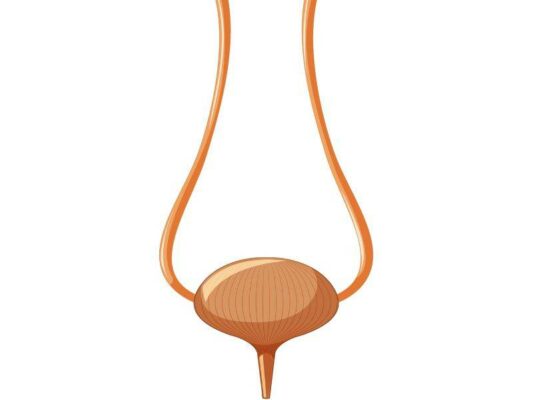
Although prostate diseases are generally known as a problem of advanced age, young and middle-aged men may also experience serious urinary tract problems. One of the most common conditions seen in young men is “Bladder Neck Elevation.” The bladder neck is the valve system at the point where the urinary bladder connects to the urinary canal. Normally, when urination begins, this region should expand like a funnel and open to allow urine to pass.
In patients with bladder neck elevation, this valve system cannot open fully either structurally or functionally. Even if the bladder muscle contracts, urine flow remains very weak because the opening does not widen sufficiently. Patients report that they have had weak urine flow since their youth and sometimes need to strain. Since the symptoms are very similar to prostate enlargement, many young patients mistakenly use prostate medications without benefit. The definitive diagnosis is made by directly observing the anatomical narrowing of that region by entering with a camera (cystoscopy).
Contact us now to get detailed information about treatments and to make an appointment!
How Is TUIP Applied Differently From Prostate Surgery in Bladder Neck Elevation?
This narrowing in the bladder neck does not easily open with medication because the problem is usually anatomical, that is, structural. The standard solution applied for these patients is a closed surgical intervention called TUIP (Transurethral Incision of the Bladder Neck). In the TUIP procedure, prostate tissue is not scraped or removed; instead, small but deep incisions are made in the narrowed bladder neck region that cannot open fully.
These incisions permanently widen that part of the urinary canal and allow urine to flow easily. Today, these incisions can be made not only with electrical instruments but also with precise lasers used in HoLEP surgeries. The use of lasers reduces bleeding to zero and accelerates healing. The procedure is short and rapidly eliminates the complaints of young patients.
What Is Chronic Prostatitis and How Does It Differ From Other Prostate Diseases?
Chronic Prostatitis is perhaps one of the most complex diseases to manage in the field of urology and one that exhausts the patient psychologically the most. Although prostatitis means inflammation of the prostate gland, in the vast majority of cases there is no detectable actual bacteria or infection. Therefore, in modern medicine this condition is also referred to as “Chronic Pelvic Pain Syndrome.”
Patients experience vague, aching pains in their testicles, groin, lower back, or anal region for months or even years that are difficult to describe and drain their energy. These pains may be accompanied by frequent urination, burning during urination, or sexual dysfunction. The fact that no clear abnormality is often found in imaging methods or laboratory tests causes patients to feel helpless and leads them to consult multiple doctors. This condition has a completely different mechanism from age-related prostate enlargement (BPH) and mostly affects the young/middle-aged group.
Why Is the UPOINTs System Necessary in Chronic Prostatitis Disease?
In previous years, every patient diagnosed with chronic prostatitis was routinely given long-term antibiotic and painkiller treatments. However, the lack of benefit of antibiotics given to a non-infected tissue has led the medical world to approach this disease from a different and more holistic perspective. Because the underlying cause of each patient’s pain was different. In some patients the problem was muscle spasms, while in others neural sensitivities were at the forefront.
At this point, the classification and treatment system called UPOINTs was developed. Instead of condemning the patient to a single type of treatment, this system offers targeted solutions by dividing complaints into subgroups. In this way, unnecessary drug use has been prevented and treatment success rates have increased dramatically.
The main domains evaluated according to the UPOINTs system are as follows:
- Urinary problems
- Psychological status
- Organ-specific sensitivity
- Presence of infection
- Neurological symptoms
- Muscle sensitivity
Treatment is shaped according to these domains. For example, in a patient with muscle sensitivity (pelvic floor spasm), pelvic floor physiotherapy or shock wave therapy (ESWT) is applied instead of antibiotics. For patients with high psychological distress, stress management and nervous system-regulating medications are implemented. Thus, a personalized “treatment map” is created for each patient.
How Is the Most Accurate Treatment Strategy Determined in Prostate Diseases?
These tremendous technological developments in medical science now mean that there are many more options available. The era of “the same surgery for everyone” has completely ended. Today, the key to success is to match these advanced technological methods correctly with the patient’s anatomical structure, age, general health condition, and future expectations.
While HoLEP technology permanently solves all problems in a patient with a very large prostate seeking a definitive solution, Rezum water vapor therapy becomes a life-saving option for a young patient concerned about sexual functions and wanting to return to work quickly. In patients at risk due to heart problems, the safety umbrella of Plasmakinetic TUR comes into play. In a young individual suffering from bladder neck narrowing, a TUIP procedure performed with laser can end years of suffering in a few minutes. What matters is not the name of the disease but the patient’s own dynamics.
In the postoperative period, no matter how advanced the technology is, the body needs time to adapt to the new condition. After the tissues are cleared with laser or electrical energy, the muscles that control urination are left with years of fatigue. During this period, short-term urinary leakage or dribbling is a completely natural part of the healing process and recovers within months with simple pelvic floor exercises. Thanks to modern methods, the recovery process is much more painless, bloodless, and comfortable compared to the past, and patients can return to the high-quality sleep and comfortable social life they have long missed in a short time.
Blog Posts

Genital Warts: Which Doctor or Department Should You See?
When genital warts are noticed, the [...]
Read More
13
Jul
Jul
Urinary Tract Infection (UTI): Which Doctor or Department Should You Visit?
The department patients experiencing urinary tract [...]
Read More
13
Jul
Jul

Kidney Stones: Which Doctor or Specialist Should You See?
The primary specialty that patients with [...]
Read More
13
Jul
Jul
Kidney Diseases: Which Doctor or Department Should You See?
The primary medical specialty that patients [...]
Read More
13
Jul
Jul
Sexually Transmitted Diseases (STDs): Which Doctor Should You See?
The answer to the question of [...]
Read More
13
Jul
Jul
Kidney Cysts: Which Doctor or Department Should You See?
The primary medical specialties that patients [...]
Read More
13
Jul
Jul
Prostate Problems: Which Doctor or Specialist Should You See?
The medical specialty that men experiencing [...]
Read More
13
Jul
Jul

Premature Ejaculation: Which Doctor Should You See for Treatment?
The first and primary medical specialty [...]
Read More
13
Jul
Jul